 Back
Back
Divriği Ulu Mosque
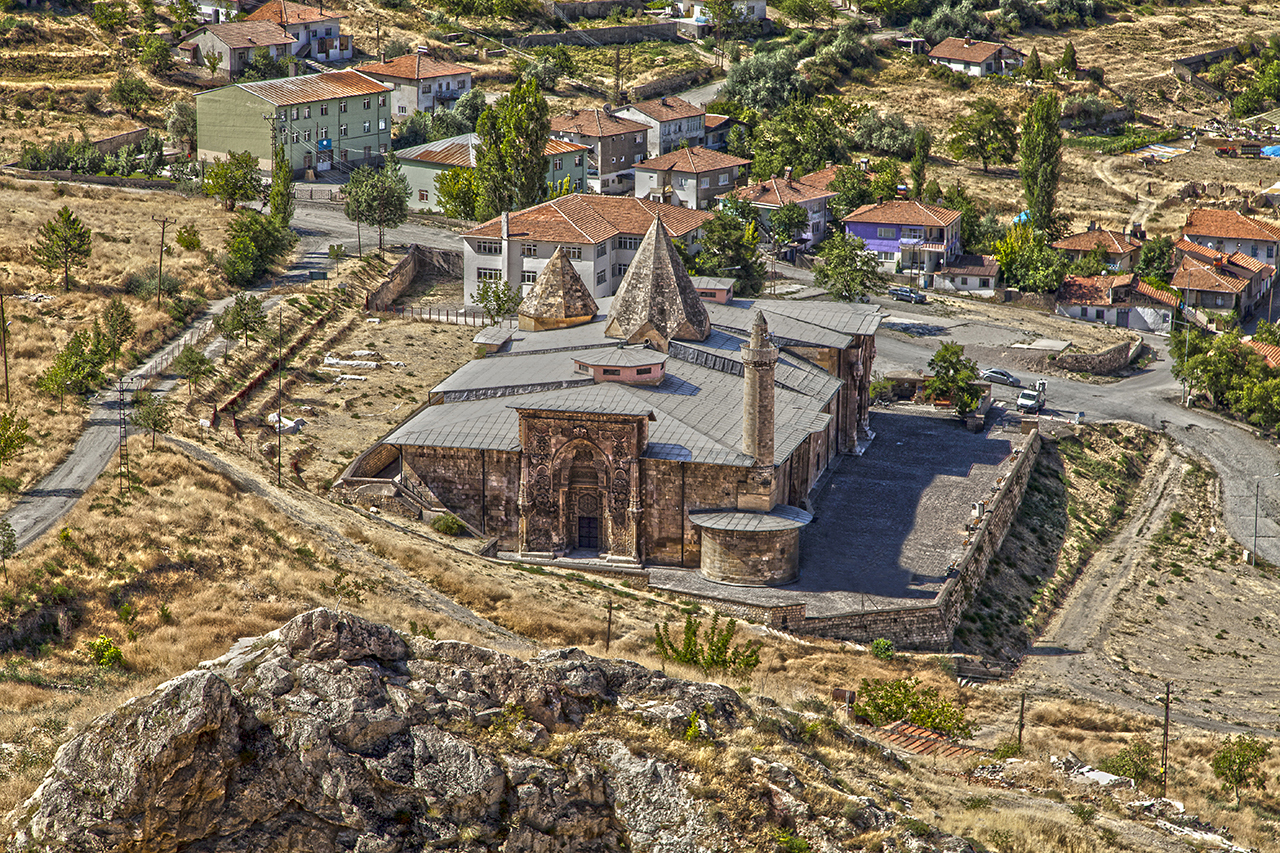
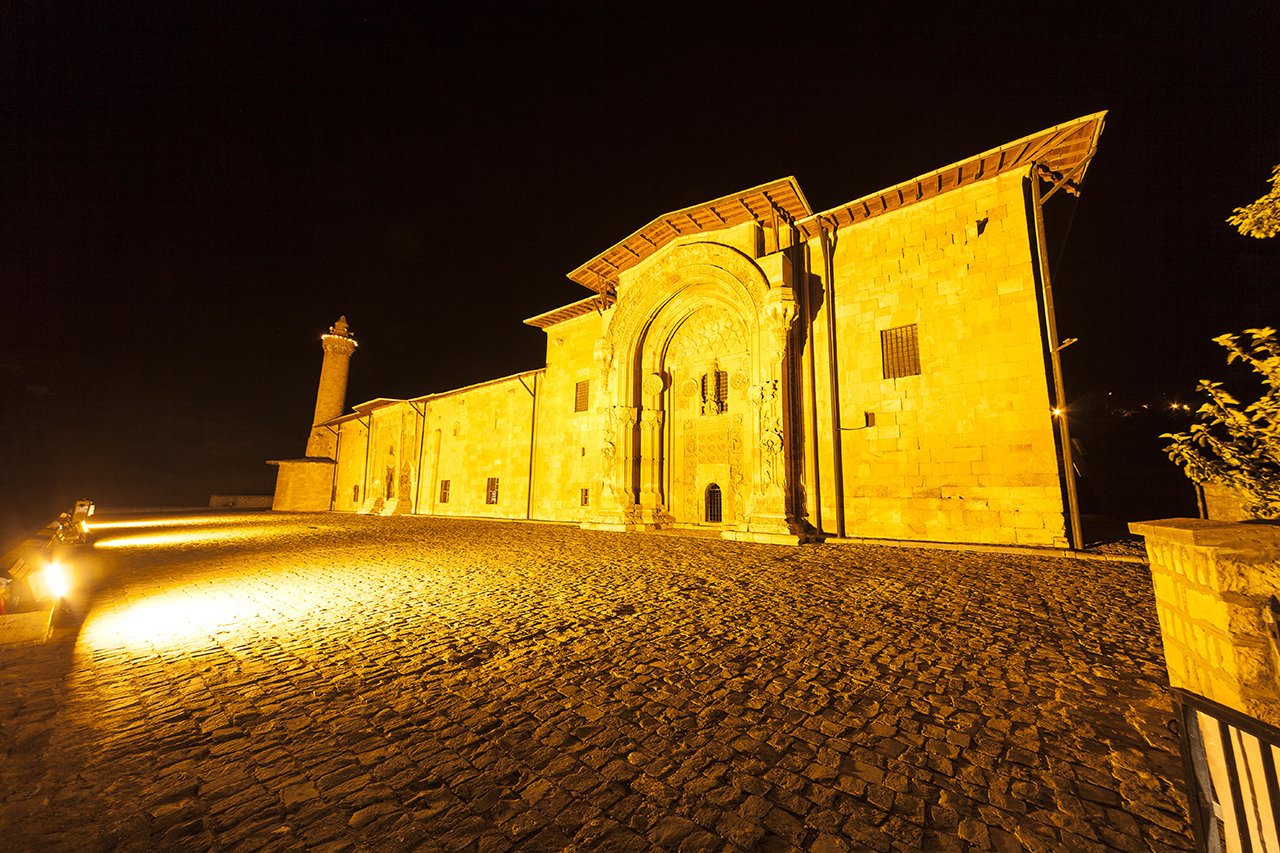
Known as the Divriği Ulu Mosque and Darüşşifa, this complex is a külliye consisting of a mosque, a darüşşifa, and a tomb.
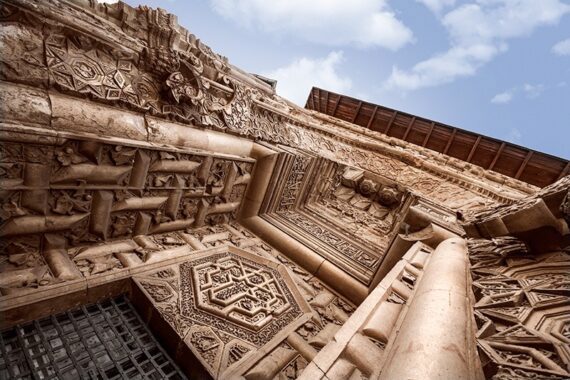
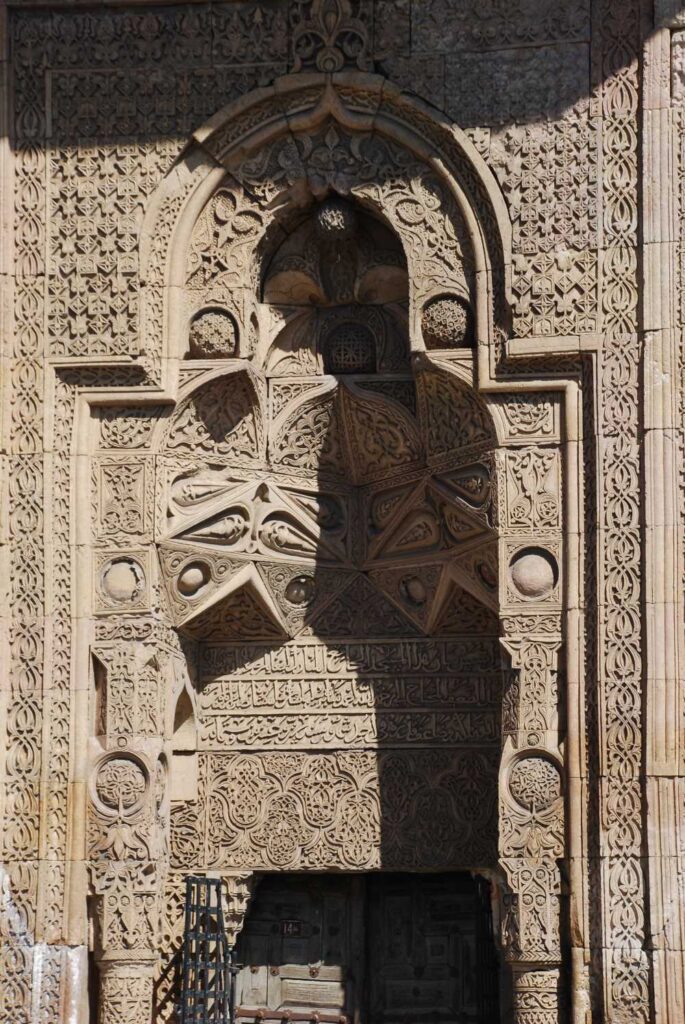
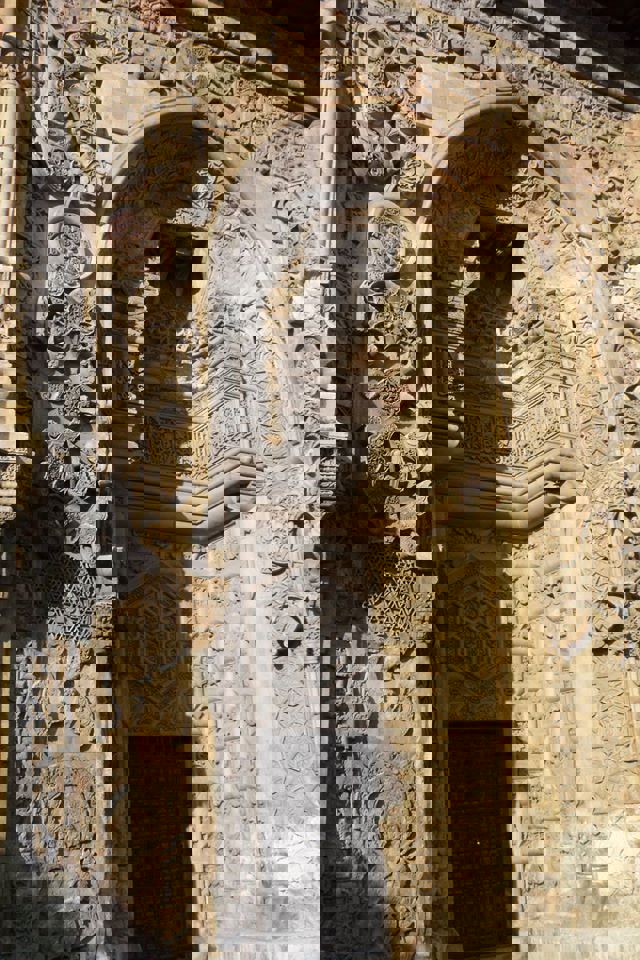
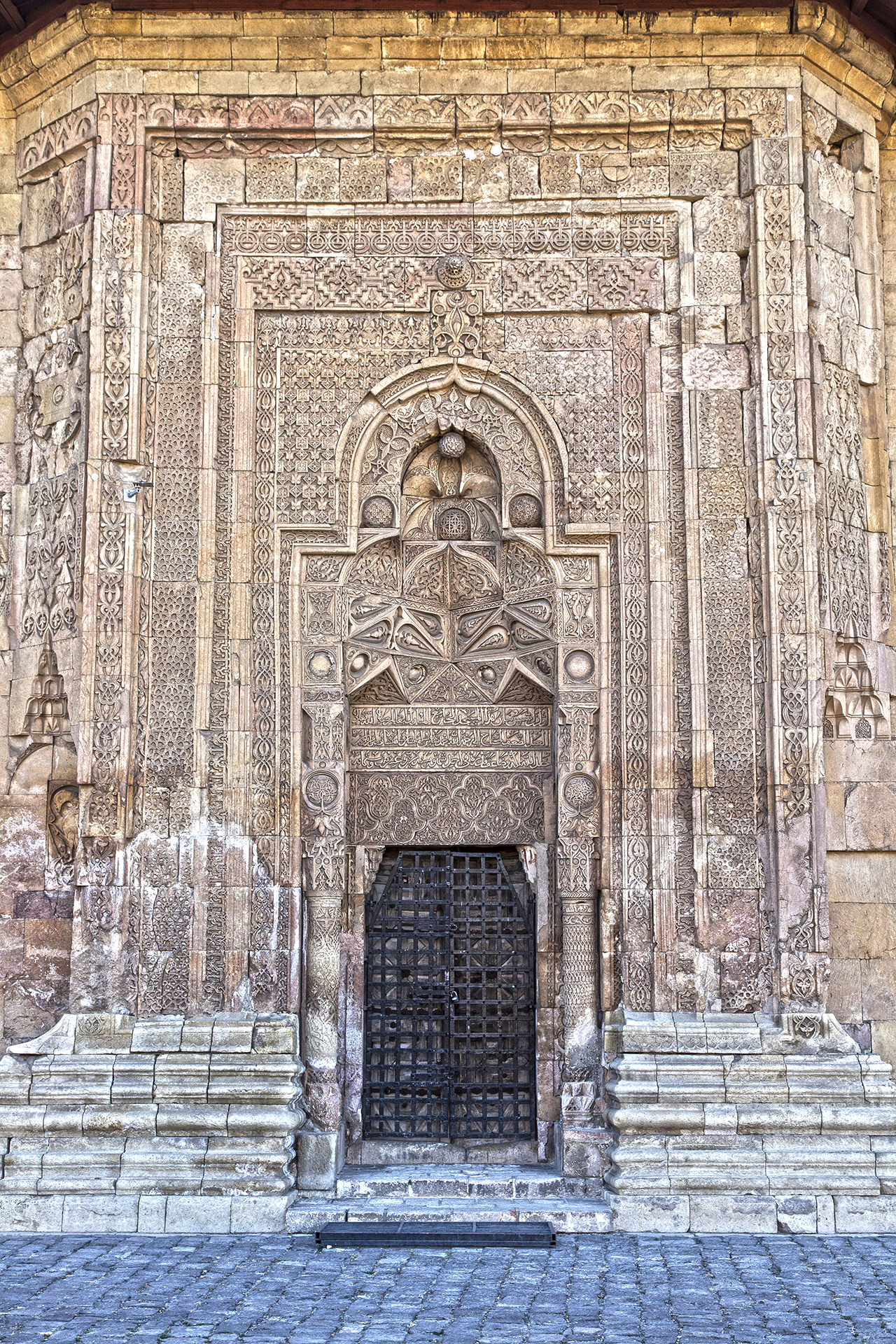
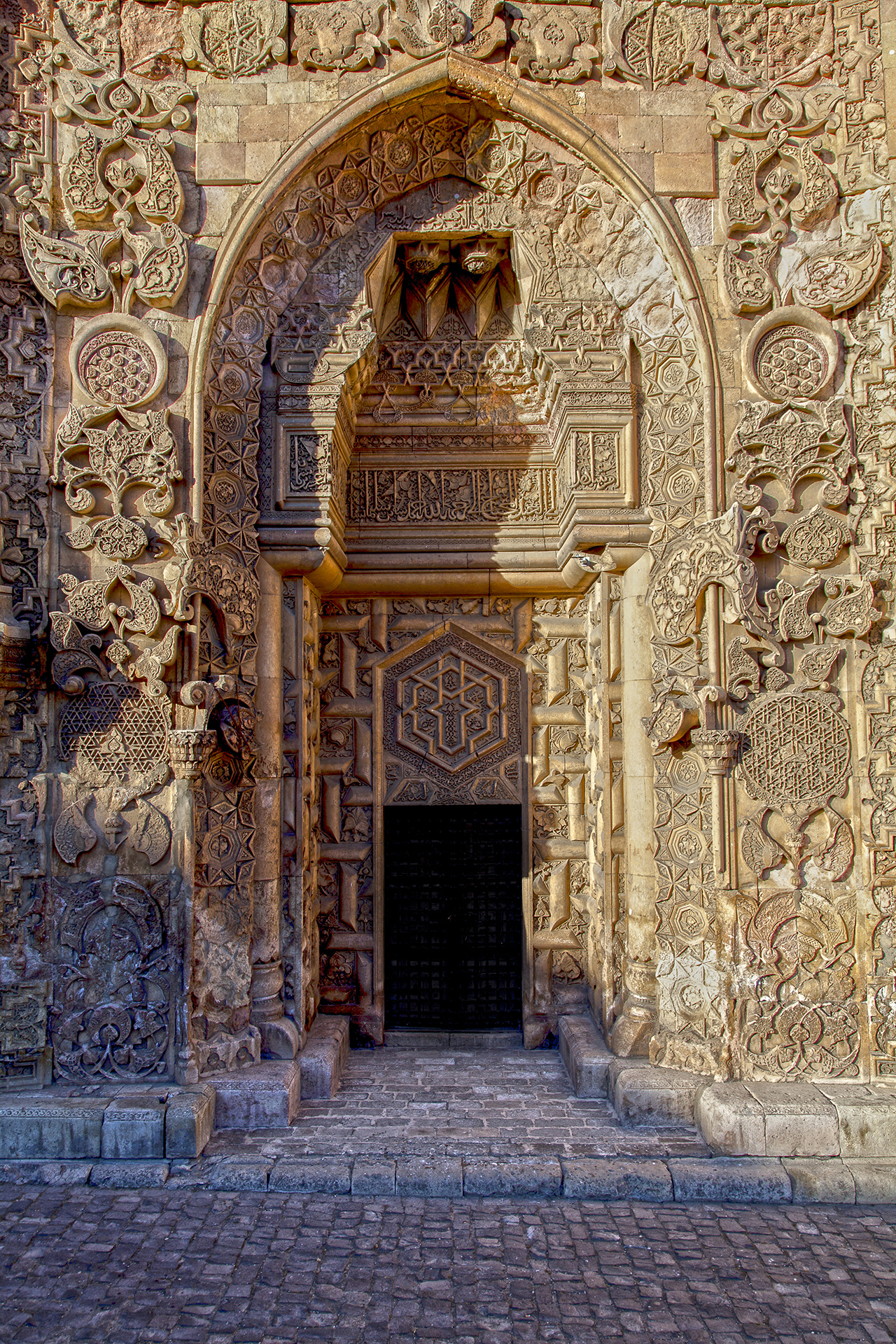
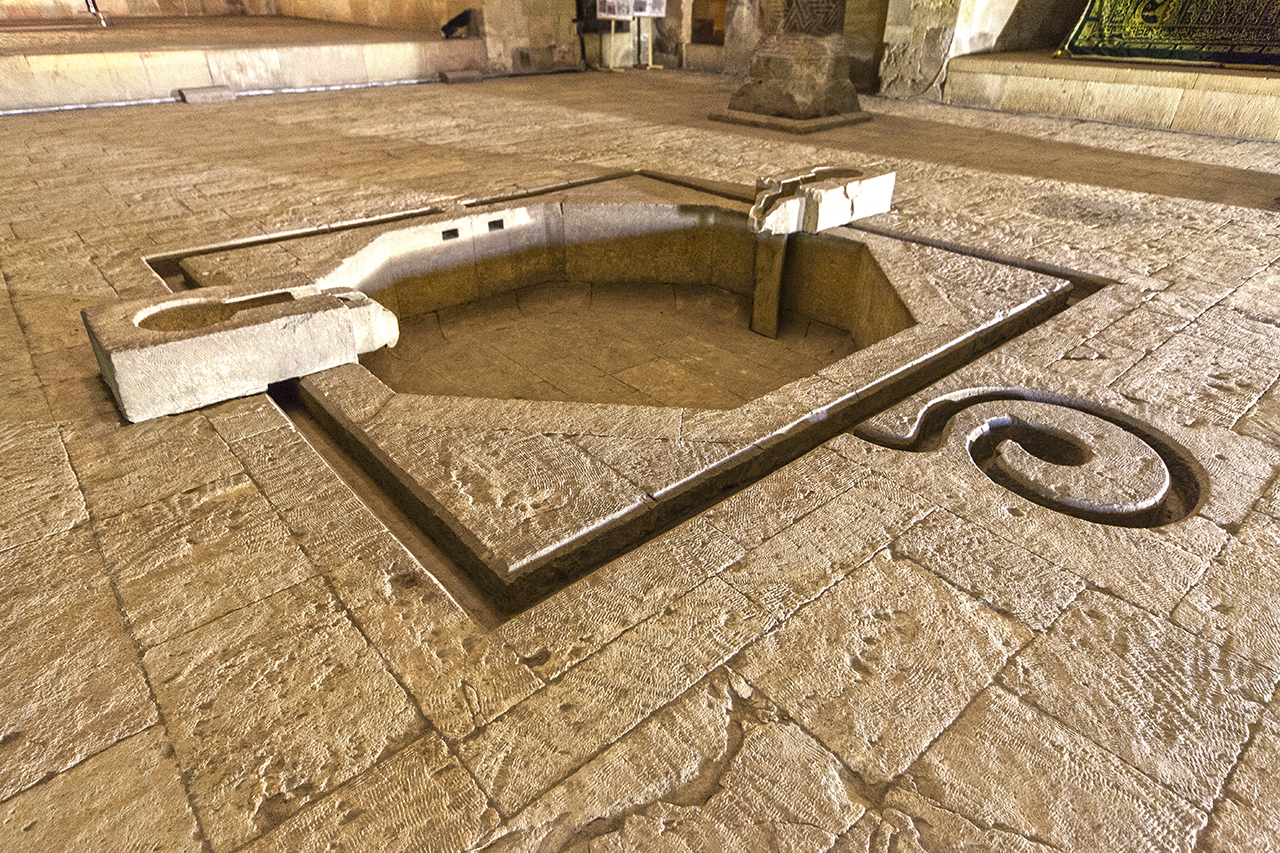
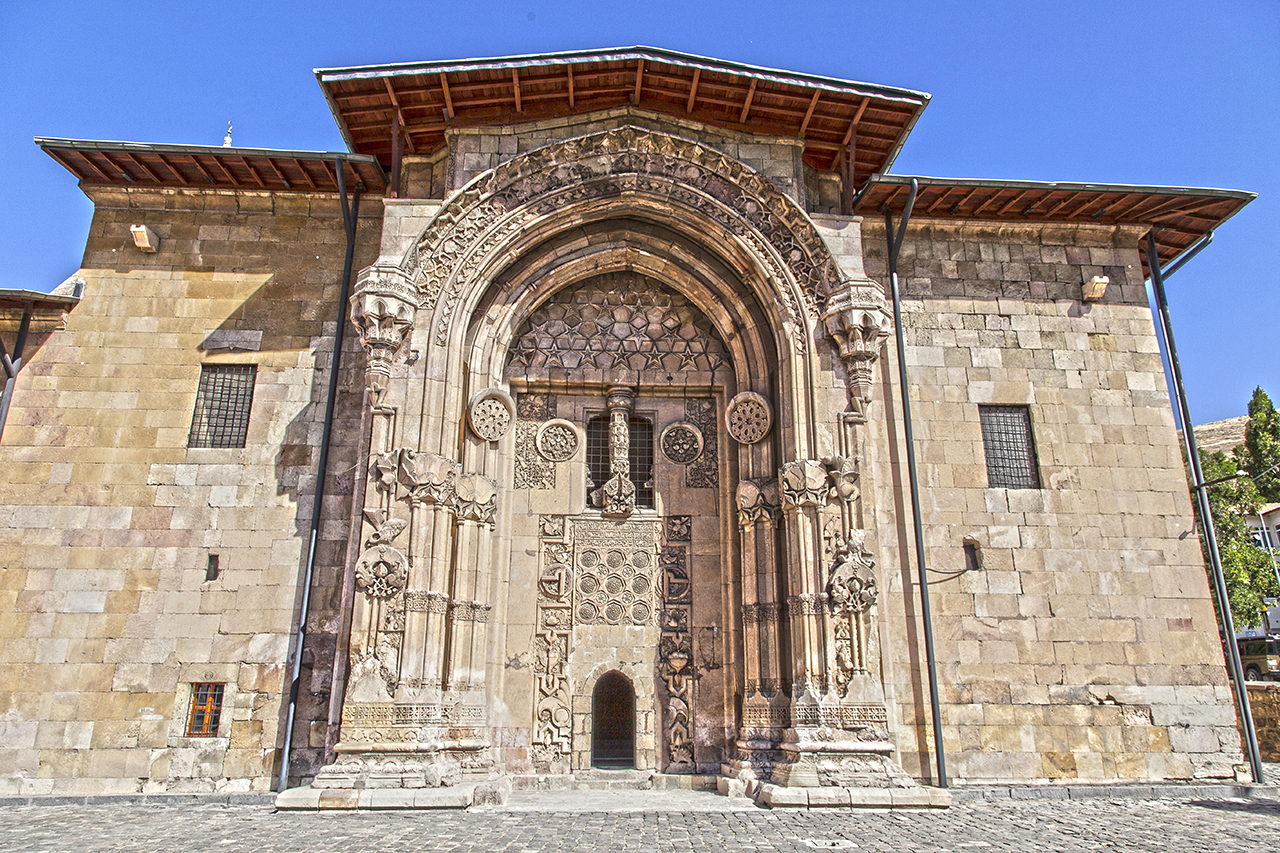
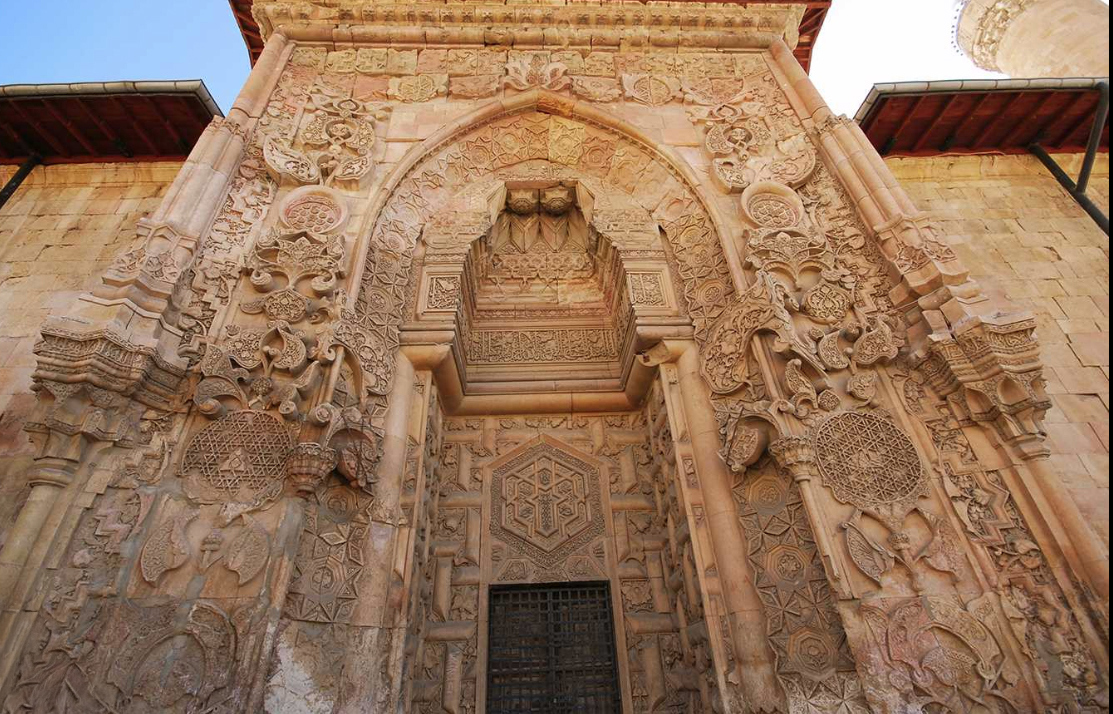
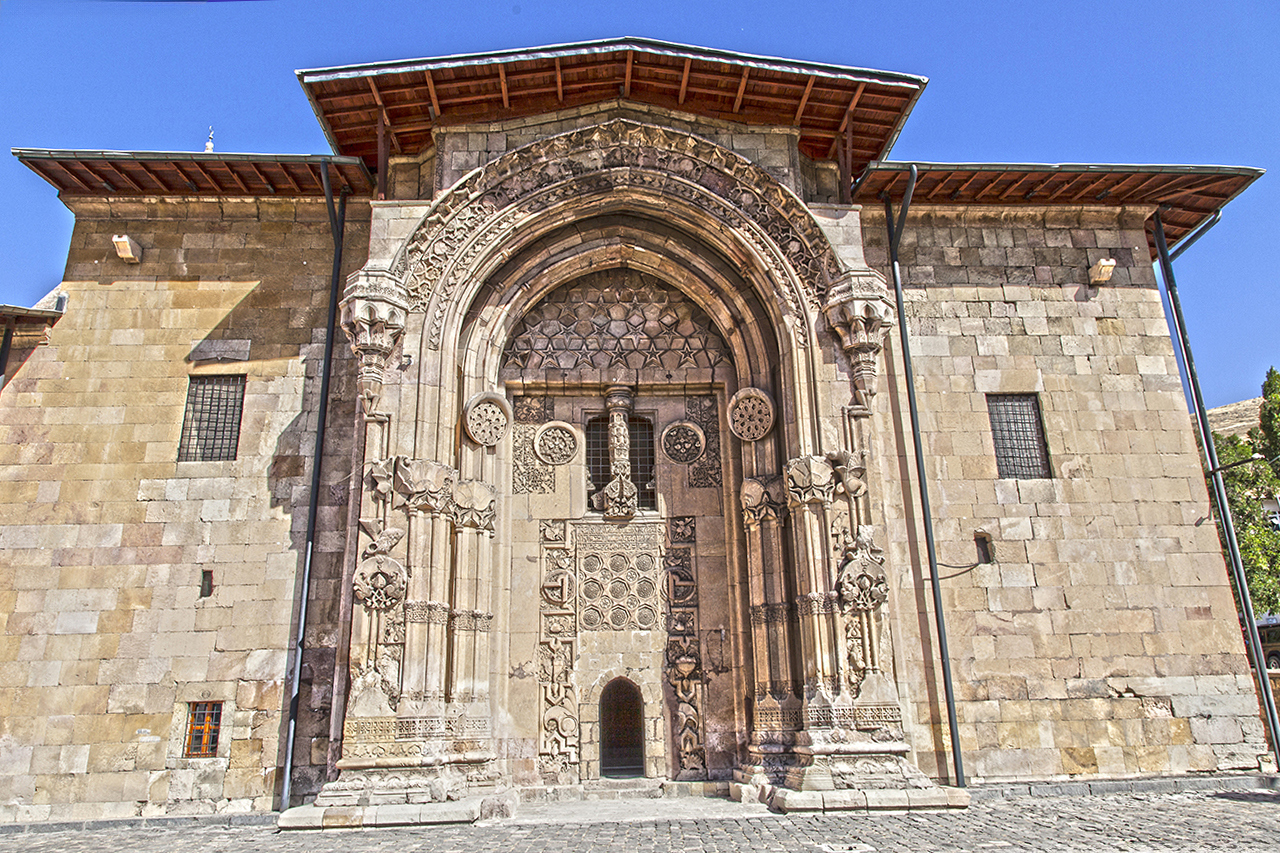
The exquisite motifs—found throughout the complex, particularly on the doors and columns, and crafted by master artisans from Ahlat and Tbilisi—reflect the finest and most delicate examples of stonework and have captured the interest and attention of the entire world.
Another feature that makes this work unique and distinctive is that, while the decorations—which appear symmetrical from a distance but are essentially asymmetrical—contain tens of thousands of motifs, not a single one is ever repeated; and the fact that the magnificent harmony and balance among the diverse entities of the universe are etched into the stone and laid bare for all to see. This masterpiece, which stands out for its architectural style and the balanced, harmonious design of its ornamentation and vaulting systems, ranks at the top of the list of must-see works worldwide.
Centuries ago, Evliya Çelebi expressed that words fall short in describing this enchanting work: “Tongues are speechless, and pens are broken in its praise.” This magnificent monument, which leaves all who see it in awe, has been described by art historians as the “Miracle of Divriği” and the “Alhambra of Anatolia.” Added to the UNESCO “World Cultural Heritage” list in 1985, this masterpiece of Islamic architecture is also under the protection of the Office of the President of the Republic of Turkey.
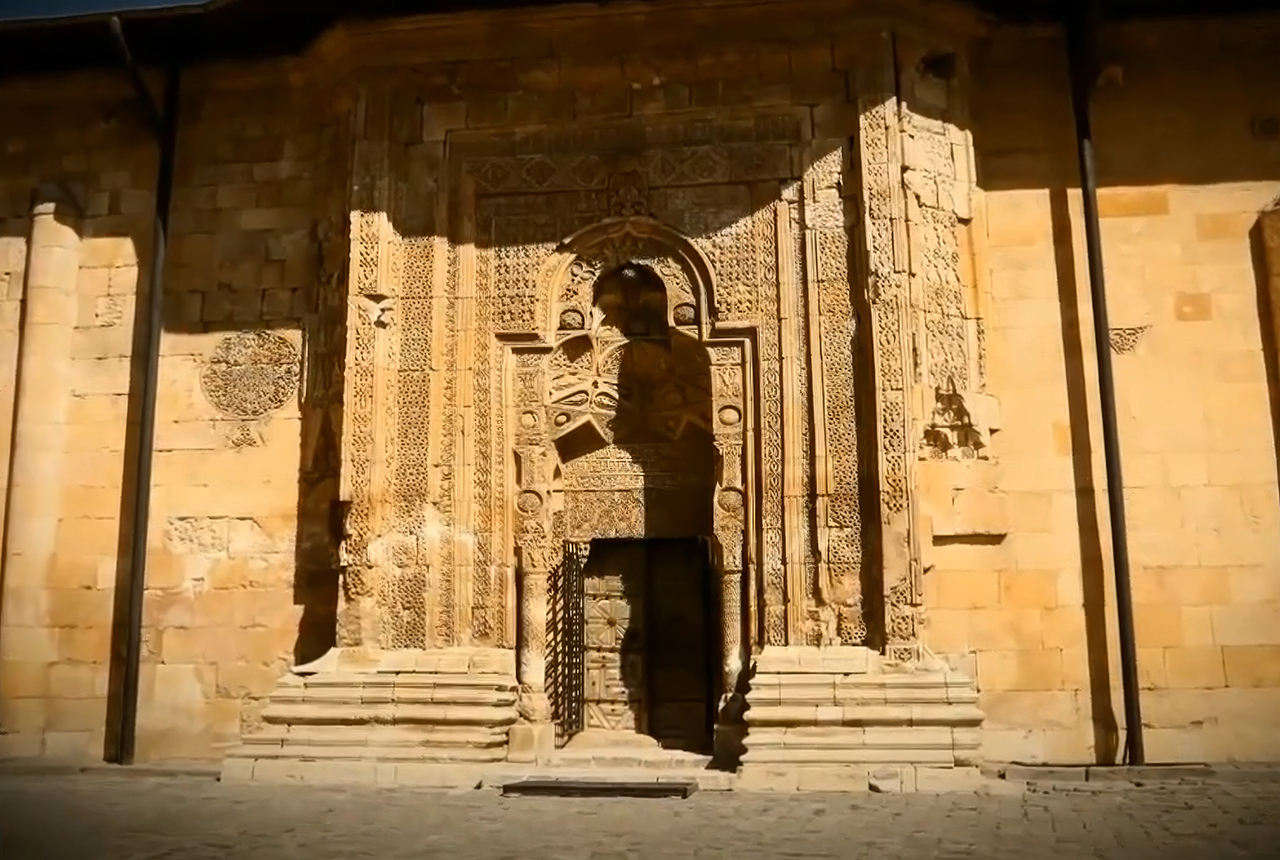
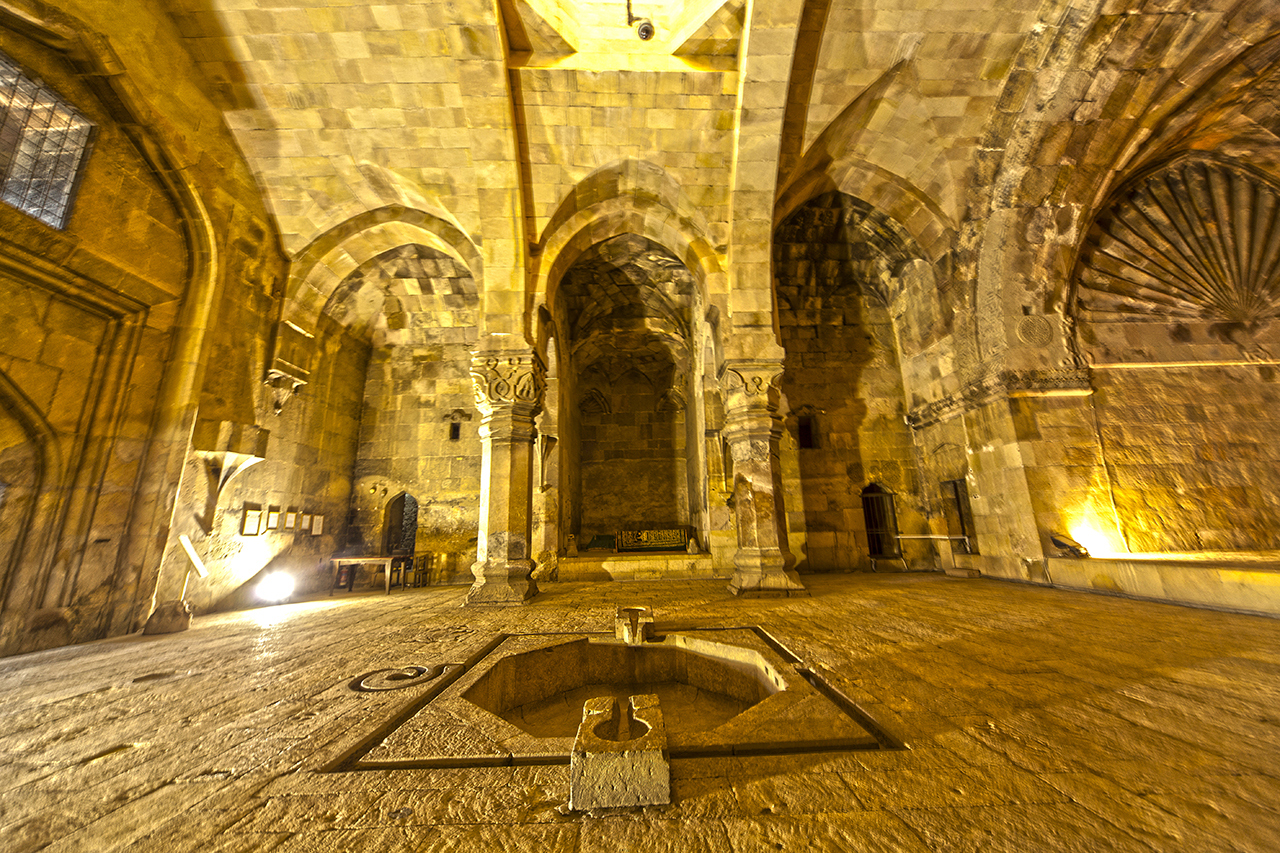
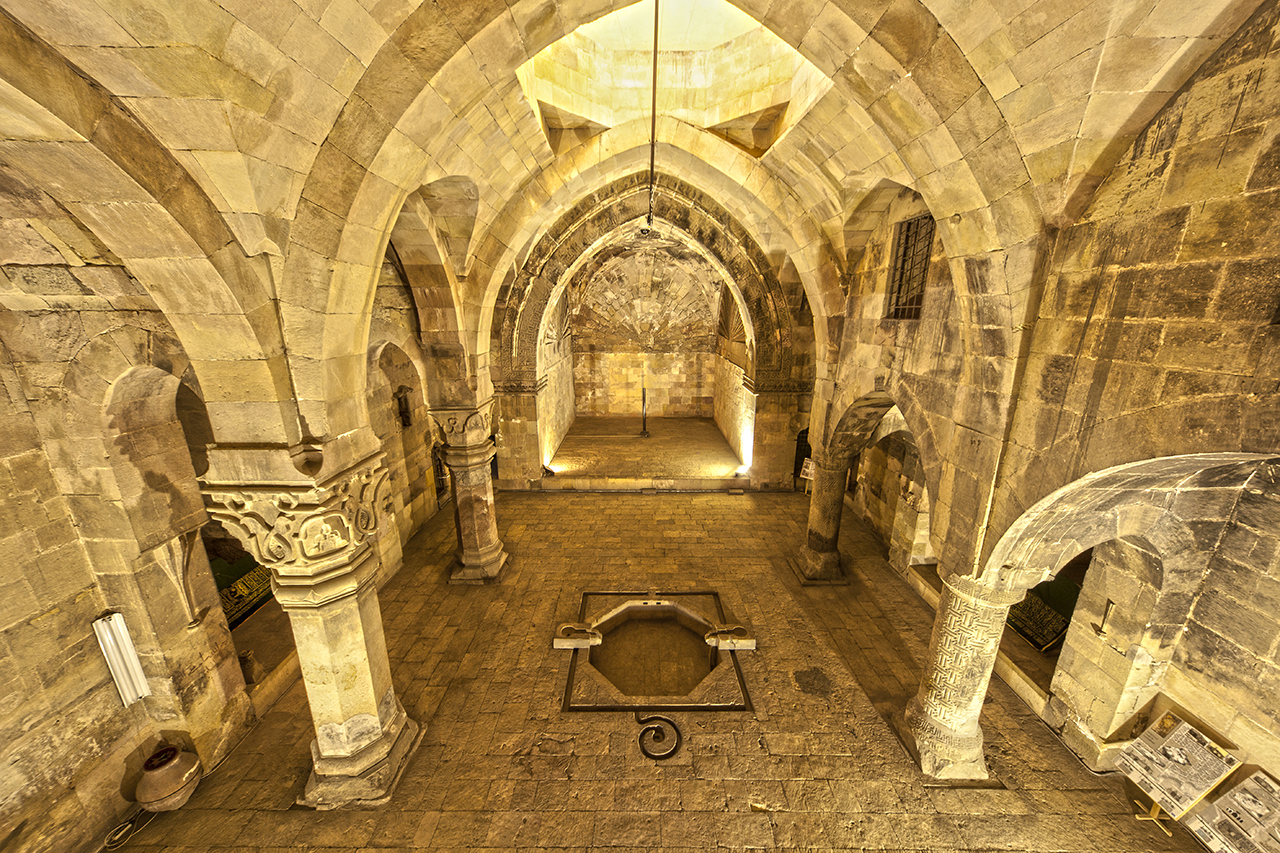
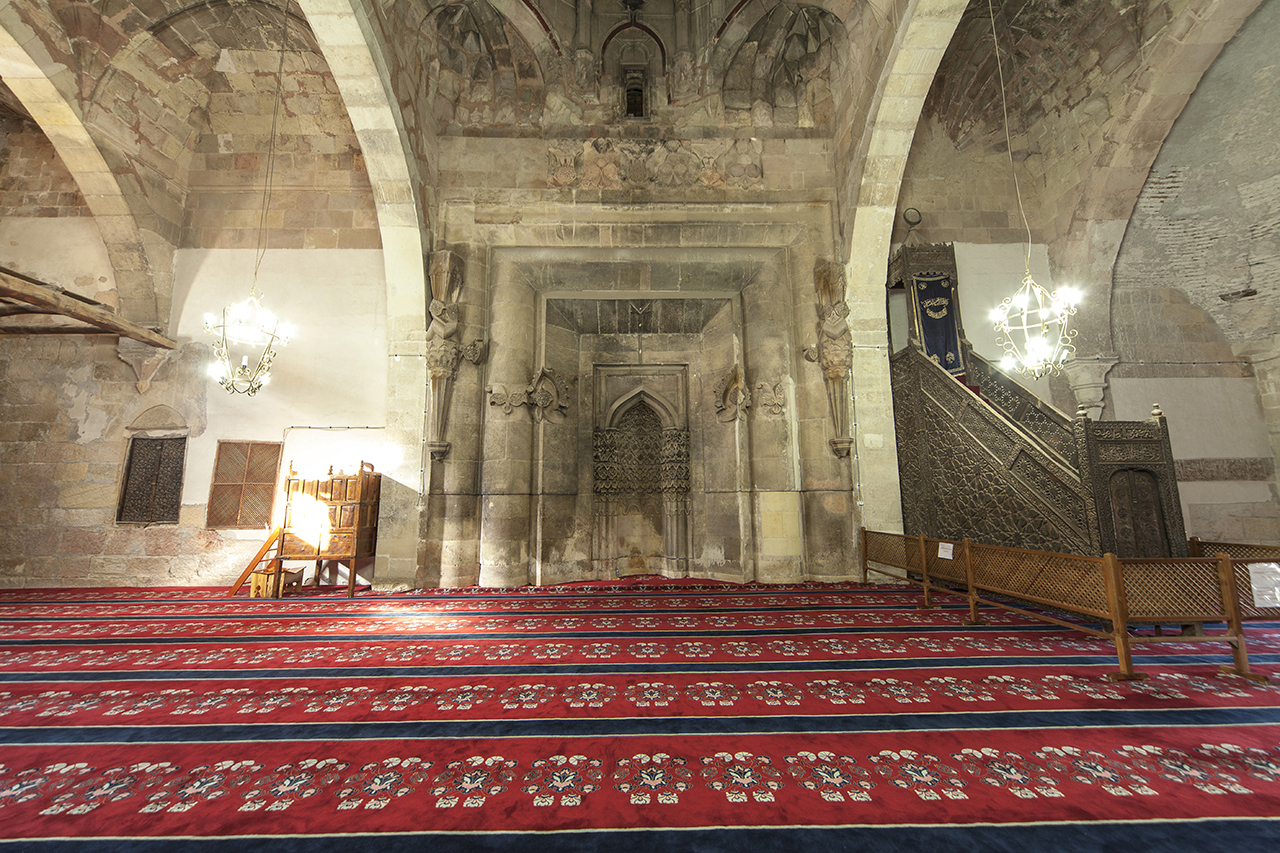
The Sivas Divriği Ulu Mosque is a rectangular structure oriented along a north-south axis and built entirely of cut stone. There are three separate monumental gates on the north, west, and east sides, providing entry and exit to the mosque. The interior is divided into twenty-five sections of varying widths by double-sided pointed arches connecting octagonal piers. The area in front of the large mihrab is segmented, while the central section is covered by oval domes. The dome of the central section, which features an octagonal skylight, is topped with an octagonal pyramidal spire. The roofing systems of the other sections consist of star, cross, and composite vaults. The royal gallery in the southeast also stands out with its composite vaulted ceiling. The interior of the mosque is relatively simple compared to its doors. It is likely that this simplicity was chosen to prevent the worshippers’ attention from being distracted and to preserve the reverence and tranquility of worship. The columns on the side of the mosque’s textile gate were reinforced by Mimar Sinan during the reign of Sultan Suleiman the Magnificent. The slender columns on the side of the Shah Gate are original.
Inside the mosque, on the back side of the “Gate of Paradise,” there are two deposit boxes carved from a single piece of stone. People would leave their valuables and jewelry in these deposit boxes when they went somewhere, and upon their return, they would find them exactly as they had left them. There is also a charity stone. Charitable donors would place their alms inside this stone, and those in need would take only what they required from it. This practice reflects a sensitivity based on the principle that “one hand should not know what the other gives,” ensuring that the poor are not humiliated and their dignity is preserved.
On the left side of the back face of the Gate of Paradise, there is a motif of a spear and a torch, painted with iron oxide paint. The spear represents strength, while the torch represents knowledge. The pendants on the vault above the Gate of Paradise resemble teardrops. A window on the left side of the mihrab opens onto the tombs in the hospital, establishing a connection between the mosque and the tombs. A cylindrical, single-balcony minaret made of cut stone stands at the northwest corner of the mosque. An inscription states that the minaret was commissioned in 1565 by the Ottoman sultan Suleiman the Magnificent. It is also known that the interior of the mosque was restored during this period.