 Back
Back
West Gate (Textile Gate)
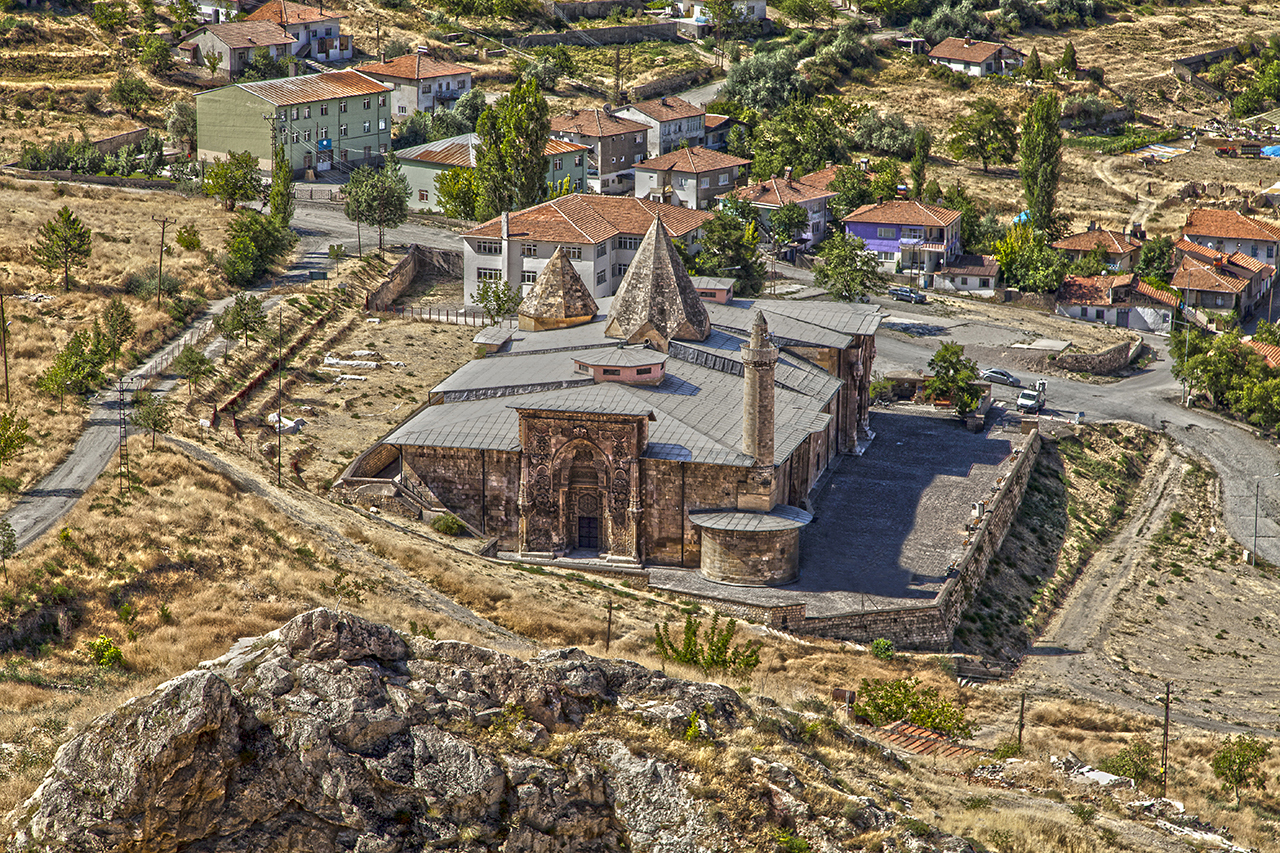
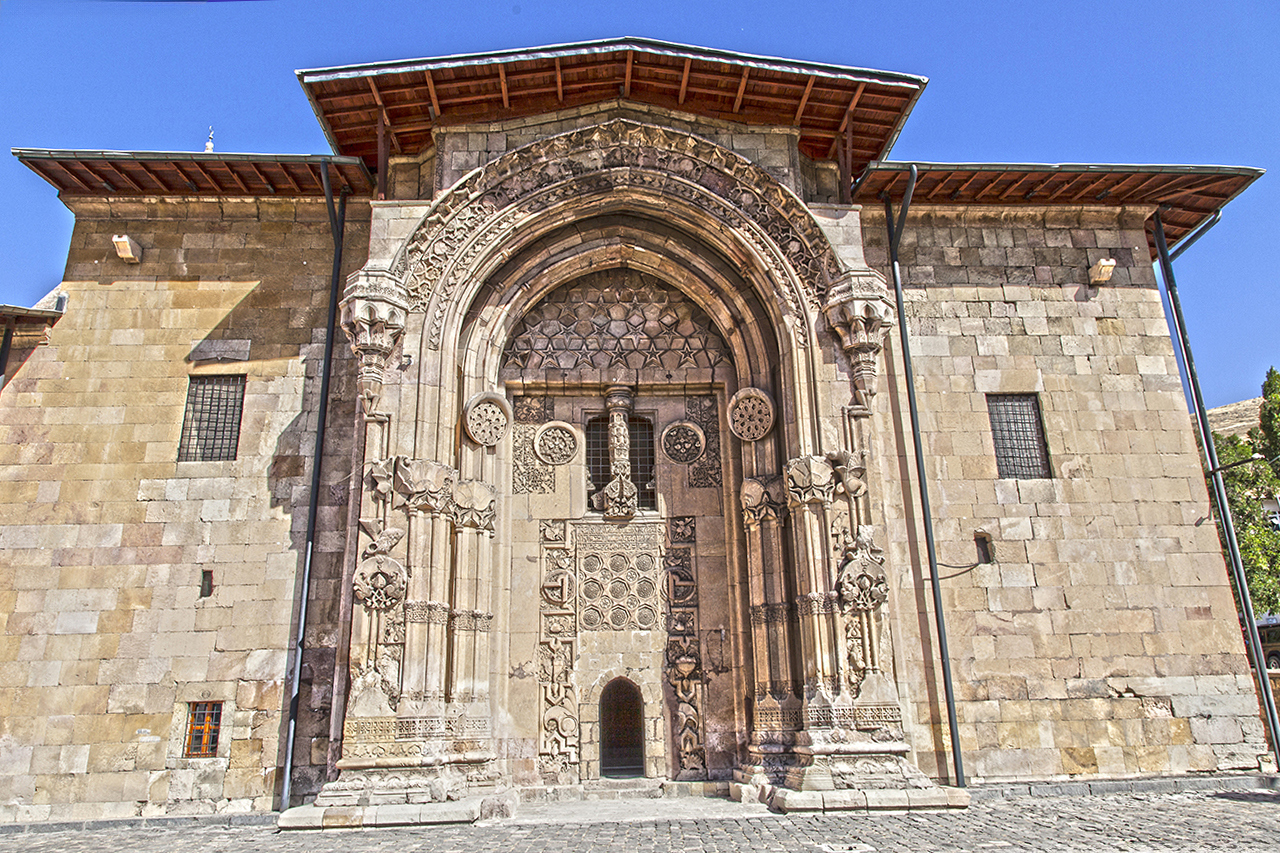
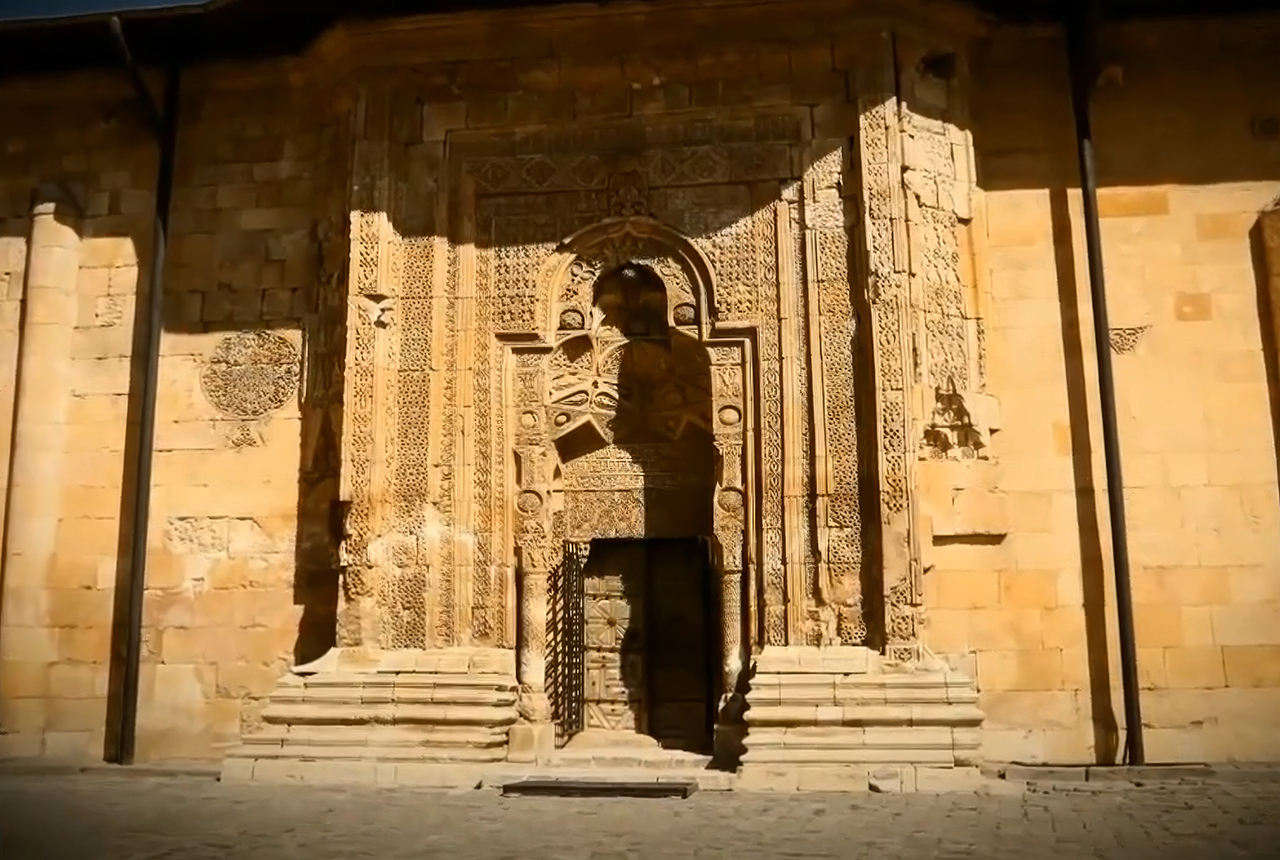
The West Gate of the Divriği Ulu Mosque
623 views
UNESCO World Heritage
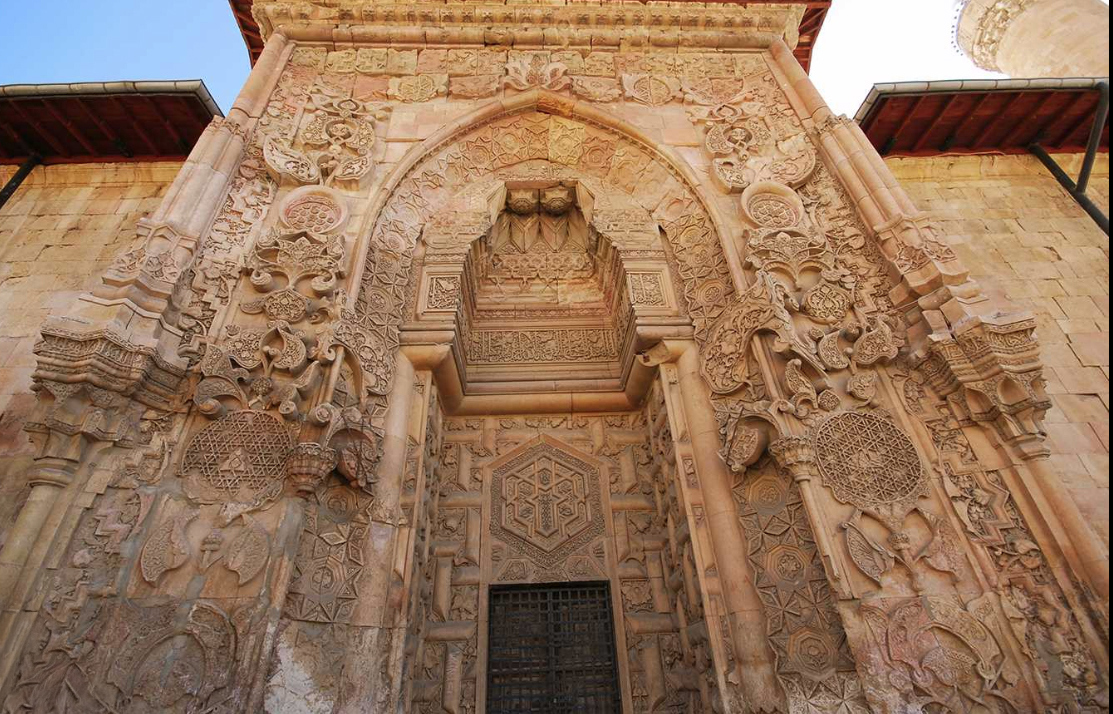
The West Gate of the Divriği Ulu Mosque, also known as the Textile Gate, is one of the pinnacles of Islamic architecture, with its intricate stonework and lace-like motifs that resemble a rug or prayer mat. Adorned with tulip motifs—which symbolize the oneness of God in Sufism—the gate was commissioned by Ahmet Shah in 1228. The architectural ingenuity of the gate—combined with the keystone method where stones interlock and the balancing columns featuring the name of Allah carved in various styles—blends aesthetics and faith.
The gate’s most striking feature is the appearance, between May and September at afternoon prayer time, of a human figure that first recites the Quran and then stands in prayer. In addition to these mysterious silhouettes—the product of profound knowledge of physics and astronomy—the gate also features political symbols. The double-headed eagle, representing the Anatolian Seljuks, and the motif of the falcon with its head bowed—symbolizing the allegiance of the Mengücek Principality—convey the power and respect hierarchy of the era to the present day through an artistic language.