 Back
Back
Sivas Meat Bread
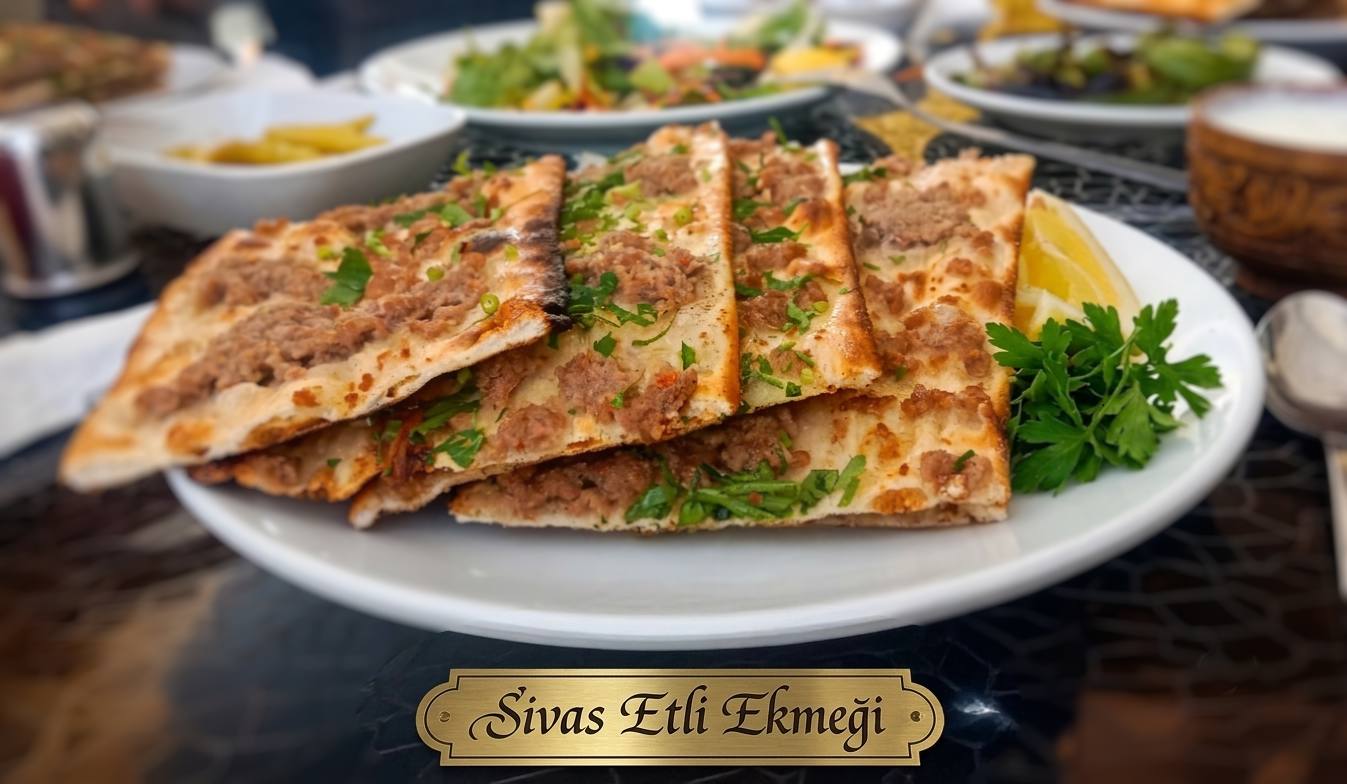
Etli Ekmek, the crown jewel of Sivas cuisine, is a registered specialty with a unique preparation method, even though it may resemble dishes from other regions at first glance.
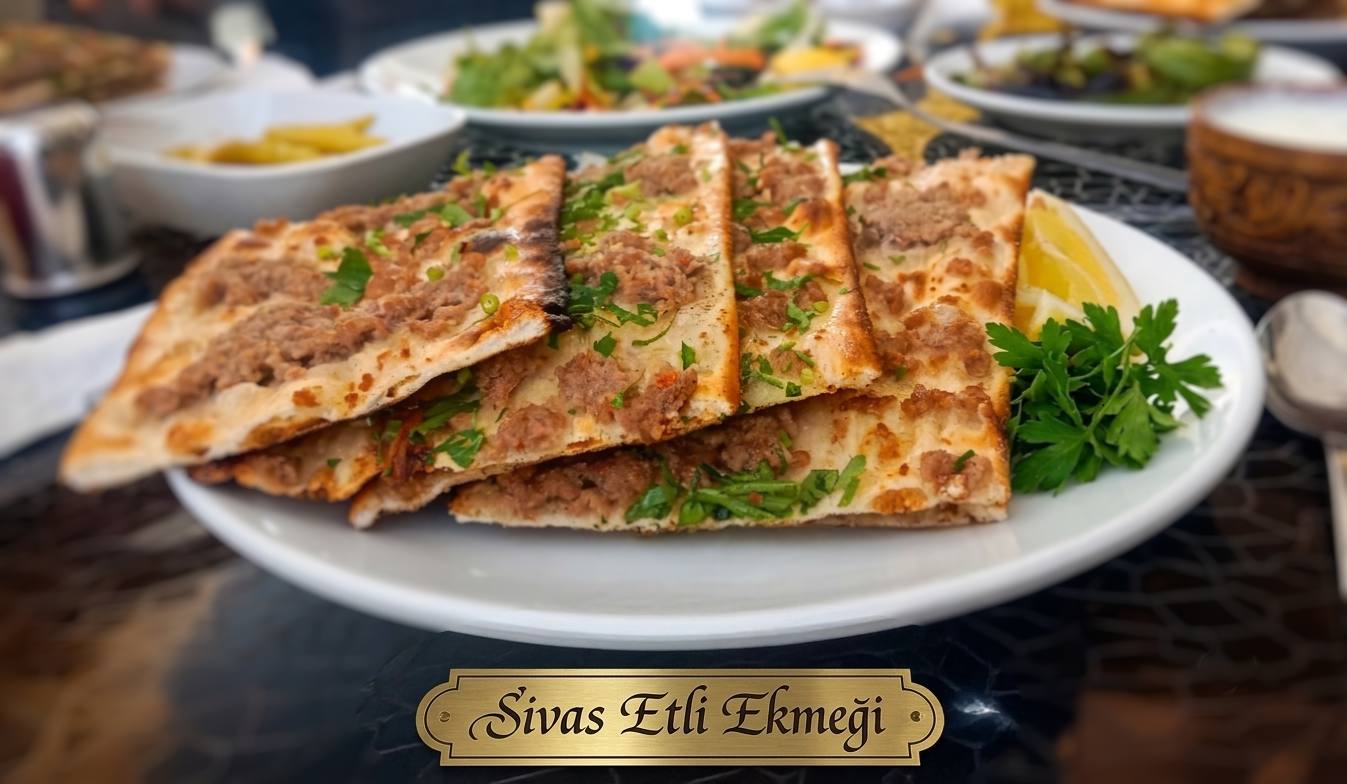
Sivas Meat Bread, which stands out as a synthesis of the baking tradition and the potential for small ruminant husbandry in Sivas’s culinary culture, is a fundamental gastronomic element that reflects the region’s socioeconomic structure and the discipline of its baking culture (Üçer, 1992). The main difference from Konya-style meat bread lies in the meat being ground with a meat grinder, the dough being thinner and crispier, and the proportion of vegetables in the filling being kept at a level that does not overpower the meat’s natural aroma (Altıntaş, 2022).
The success of Sivas Etli Ekmek depends on the meat being ground to the right consistency using a meat grinder and baked in stone ovens over an oak wood fire. During preparation, the meat is first trimmed of sinews and ground using a meat grinder into fine mince of a size that can be chewed. The filling is prepared by adding very finely chopped tomatoes, hot peppers, and salt to the ground meat. In the Sivas method, onions, garlic, or overpowering spices are not added to the mixture; the primary goal here is to highlight the meat’s natural flavor (Üçer, 2010).
The dough is prepared using bread flour, water, and a small amount of yeast. After resting, the dough is rolled out by the baker into very thin strips approximately 80–100 cm long. The prepared meat mixture is spread evenly over the rolled-out dough. The meat-filled breads are then baked in a stone oven over an oak wood fire. During baking, the dough develops a crispy texture, and the meat retains its flavor without losing its juices. Once removed from the oven, the meat-filled breads are sliced and served hot.