 Back
Back
Madımak Dish
Madımak is not just a dish; it is also an ancient Anatolian tradition.
613 views
Sivas Cuisine
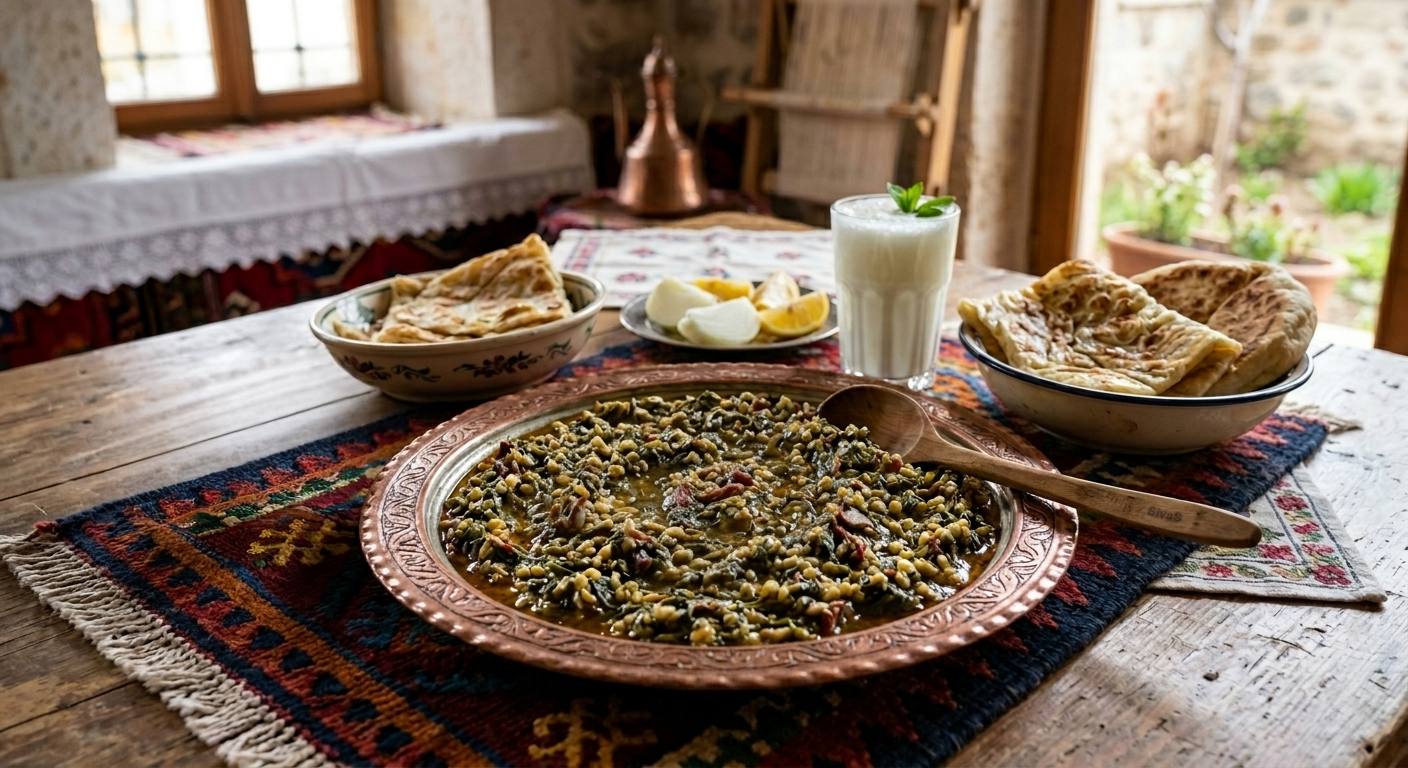
In every region of Anatolia, unique herbs grow and are known by different names. To resolve this confusion, plants are given Latin names (Karaca et al., 2015). Madımak, which is edible, is an endemic plant that grows wild in fields and meadows throughout the Sivas region from early April to late May and is regarded by the local people as a harbinger of spring. It is the first fresh vegetable dish consumed in Sivas after a long and harsh winter (Üçer, 1992).
This plant, which has become synonymous with the region, is regarded as one of the symbolic elements of Sivas’s gastronomy, and when people hear the word “madımak,” Sivas is usually the first place that comes to mind. Indeed, local products and the dishes based on them play a significant role in shaping a society’s cultural identity. Culture, on the other hand, is a concept that encompasses the totality of material and spiritual values that distinguish one society from others and are passed down from generation to generation (Uygur and Baykan, 2007). In this context, madımak and dishes prepared with madımak constitute an important part of Sivas’s gastronomic heritage.
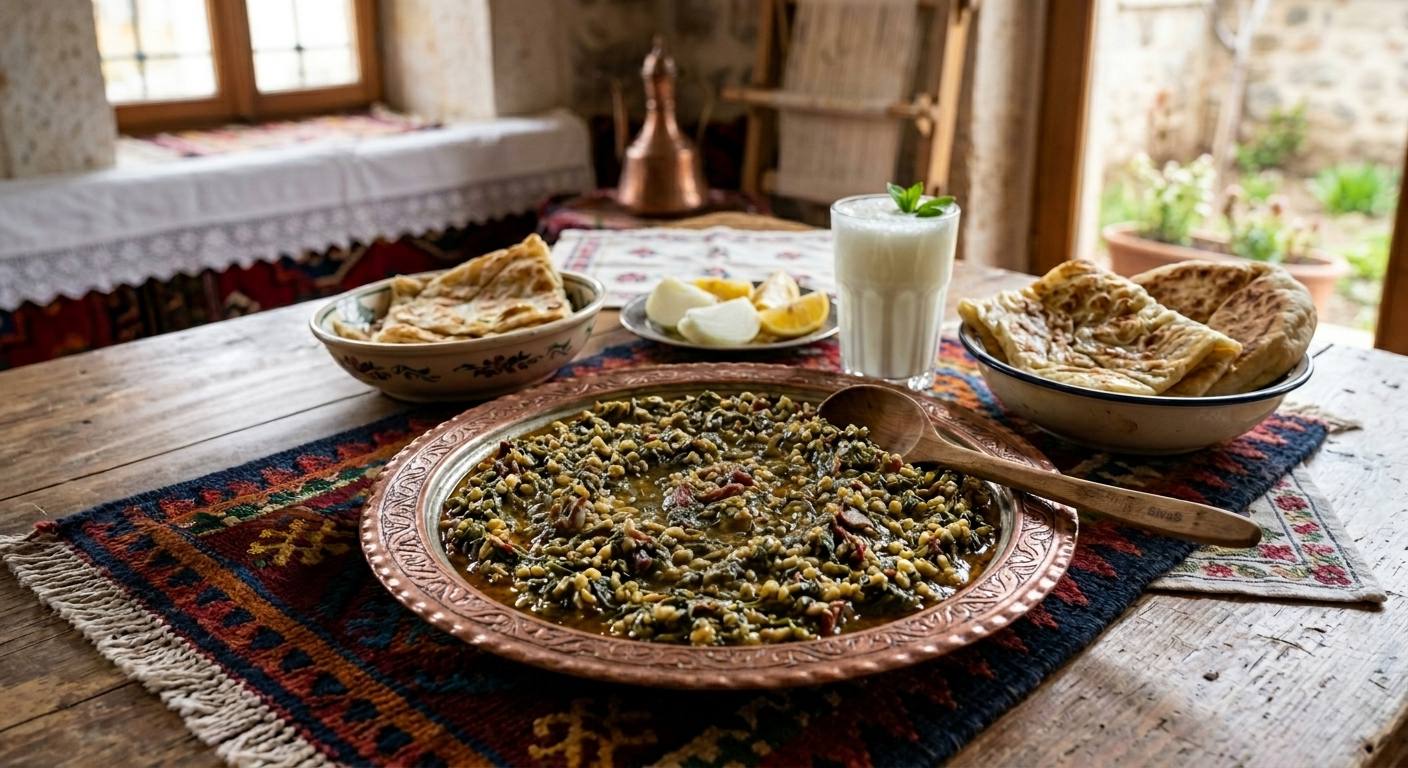
Madımak is prepared by combining finely chopped madımak with onions and tomato paste.
Sautéing: Finely chopped onions are sautéed in butter. Tomato and pepper paste are added to the sautéed onions.
Cooking: Chopped madımak, garlic, salt, and spices are added to the pot. It is a traditional practice to add meat on the bone or stewed meat to enhance the dish’s flavor.
Adding Bulgur: Finally, coarse bulgur is added to the soup to thicken it and make it more filling. Water is added until it covers the ingredients, and the pot is covered.
Serving: The madımak dish, cooked in the pot for about 40–45 minutes, is served hot (Öztürk and Arıkan, 2018).