In this context, Turkish culinary culture has been enriched through its interactions with different regions over the course of history and has developed a multifaceted gastronomic structure. Shaped by migratory movements stretching from Central Asia to Anatolia, Turkish cuisine developed and diversified particularly within the Seljuk and Ottoman royal kitchens, forming a unique identity through the fusion of different ingredients and cooking techniques. In Turkish society, food culture is regarded not merely as a means of meeting nutritional needs, but also as a form of cultural expression through its dimensions of flavor, presentation, and visual appeal (Güler, 2010).
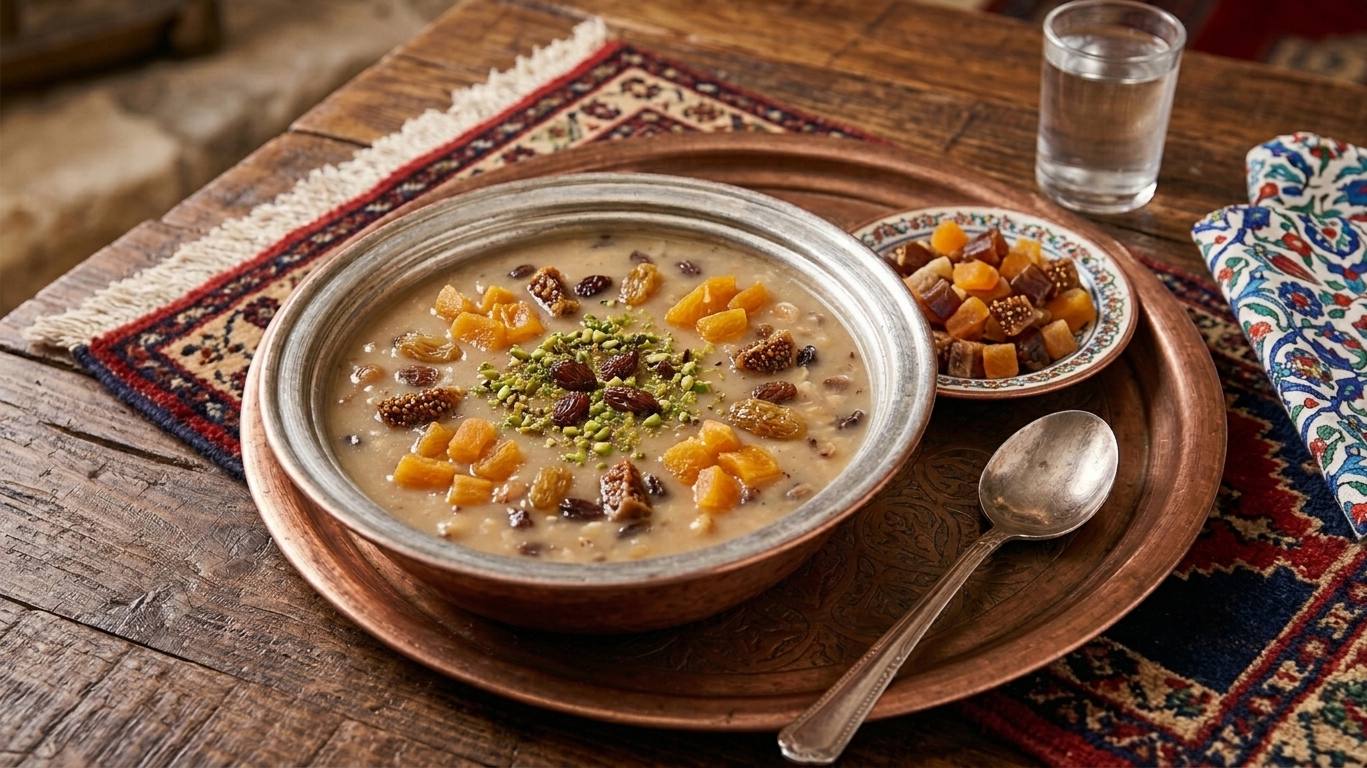
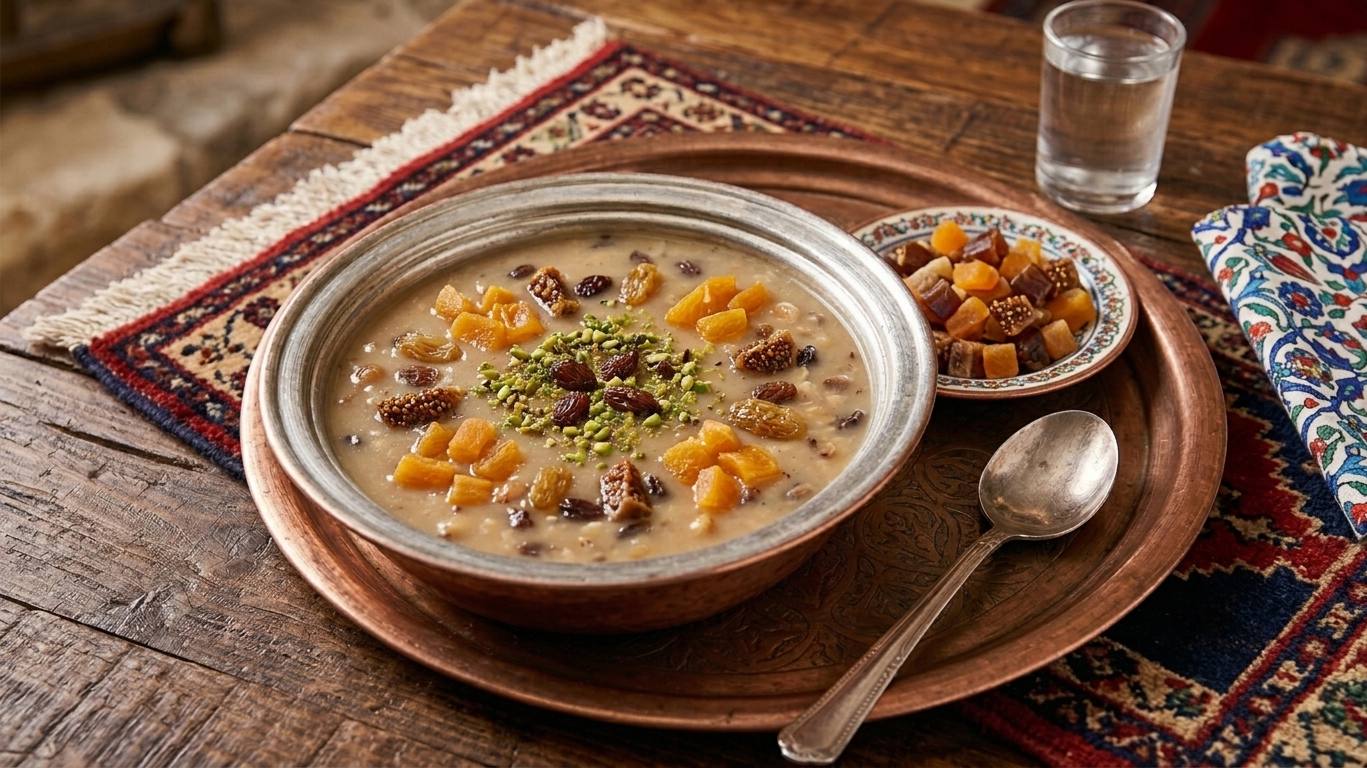
In the Sivas cuisine—one of the local manifestations of this rich culinary heritage—the dish known as “Bayram Soup” stands out as a traditional soup consumed especially on the first day of religious holidays after breakfast, offering a balanced blend of sweet and savory flavors (Figure 6.6). Regarded as a symbol of abundance and sharing in Sivas’s festive cuisine, this soup holds an important place within social rituals and is considered one of the key elements of the local gastronomic heritage (Akgül and Öncel, 2024).
The cracked wheat, chickpeas, and beans—soaked in water the night before—are parboiled to facilitate cooking and then transferred to a deep pot. One liter of water is added, and the mixture is brought to a boil. Seedless black Besni grapes and chopped dried apricots are added to the boiling mixture. To prevent delays in cooking, sugar is added after the mixture comes to a boil. As the soup thickens, figs and dates are added last. This ensures that the cooking process is not delayed and the soup does not turn dark. Once all the ingredients have plumped up and their flavors have infused into the broth, the soup’s saltiness and consistency are checked. After the soup has reached the desired consistency and cooled, it is ladled into special bowls and served sprinkled with crushed walnuts.
 Back
Back