 Back
Back
Gök Madrasa
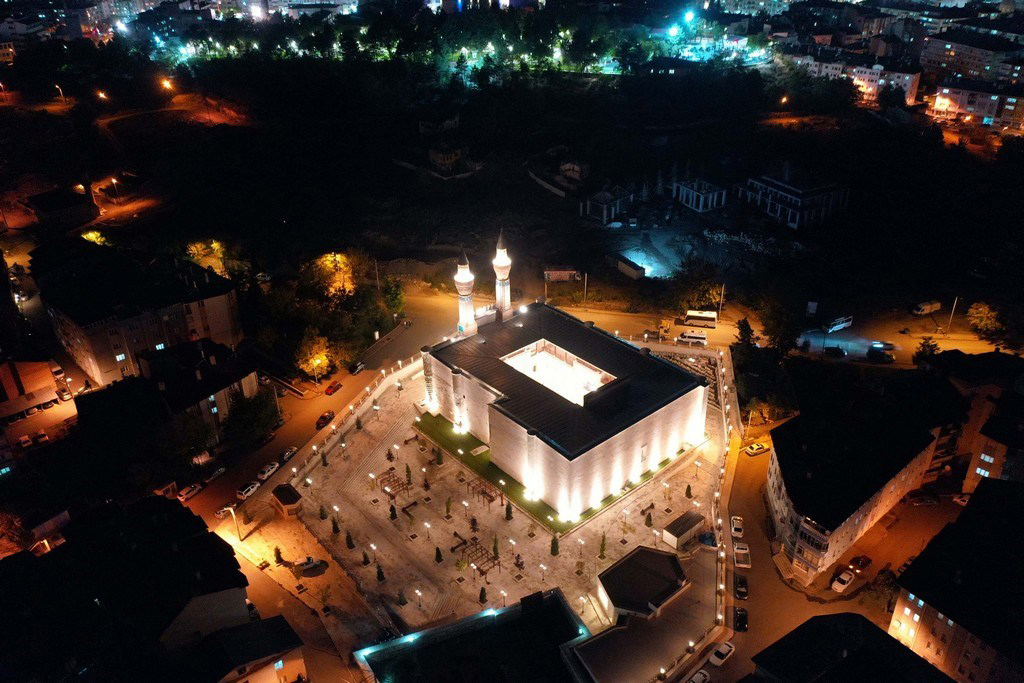
The Sivas Gök Madrasa, which holds a prominent place among the madrasas of the Seljuk period, is also known as the Sâhip Ata Madrasa and the Sâhibiyye-i Fahriyye.
Where?
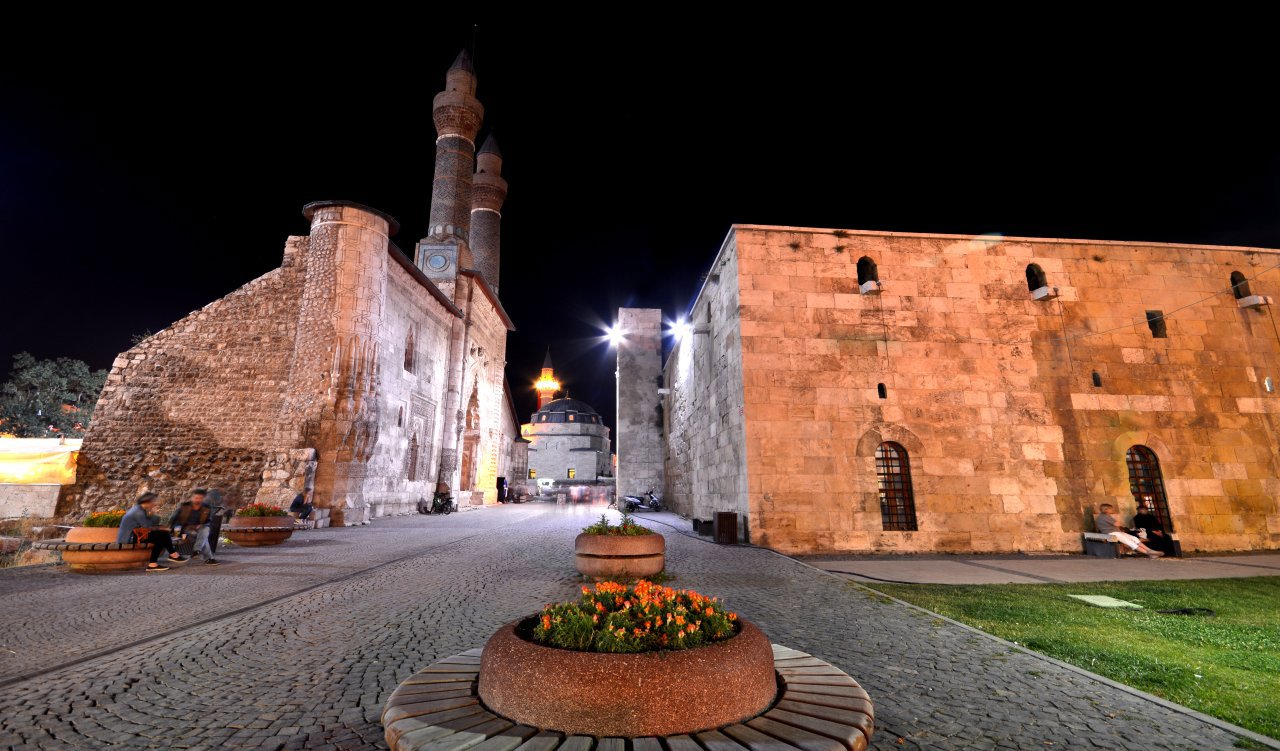
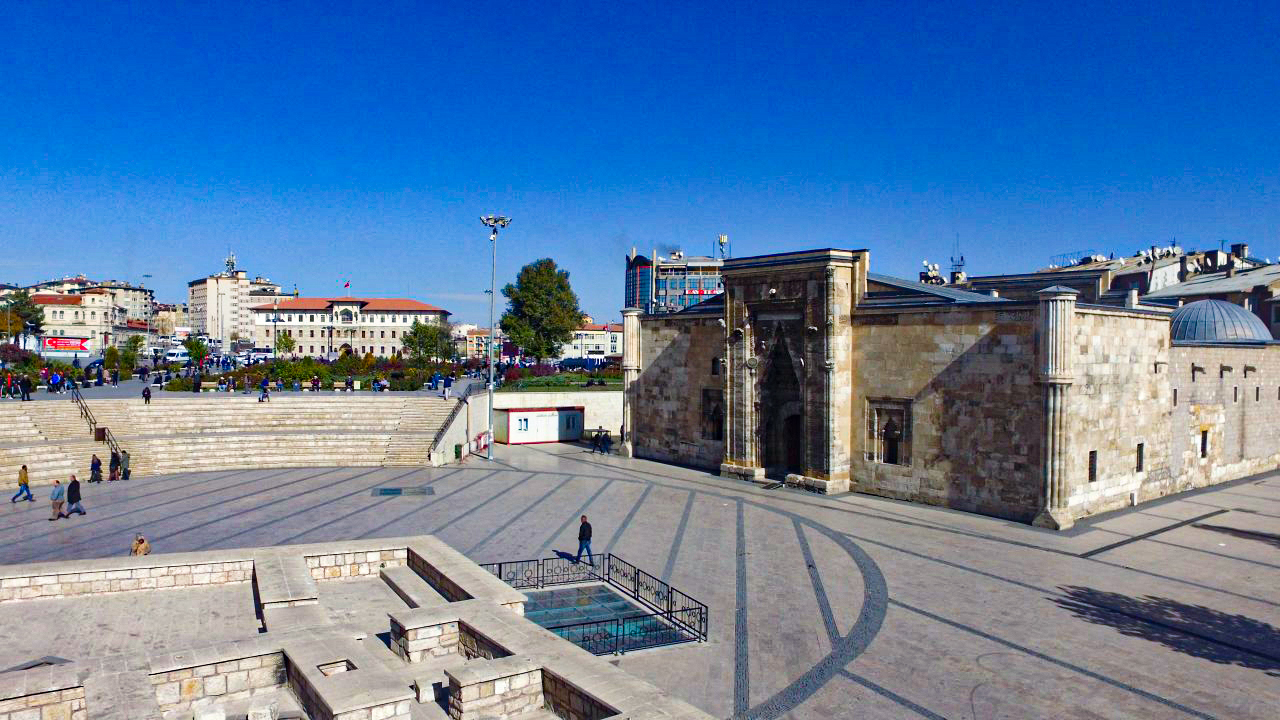
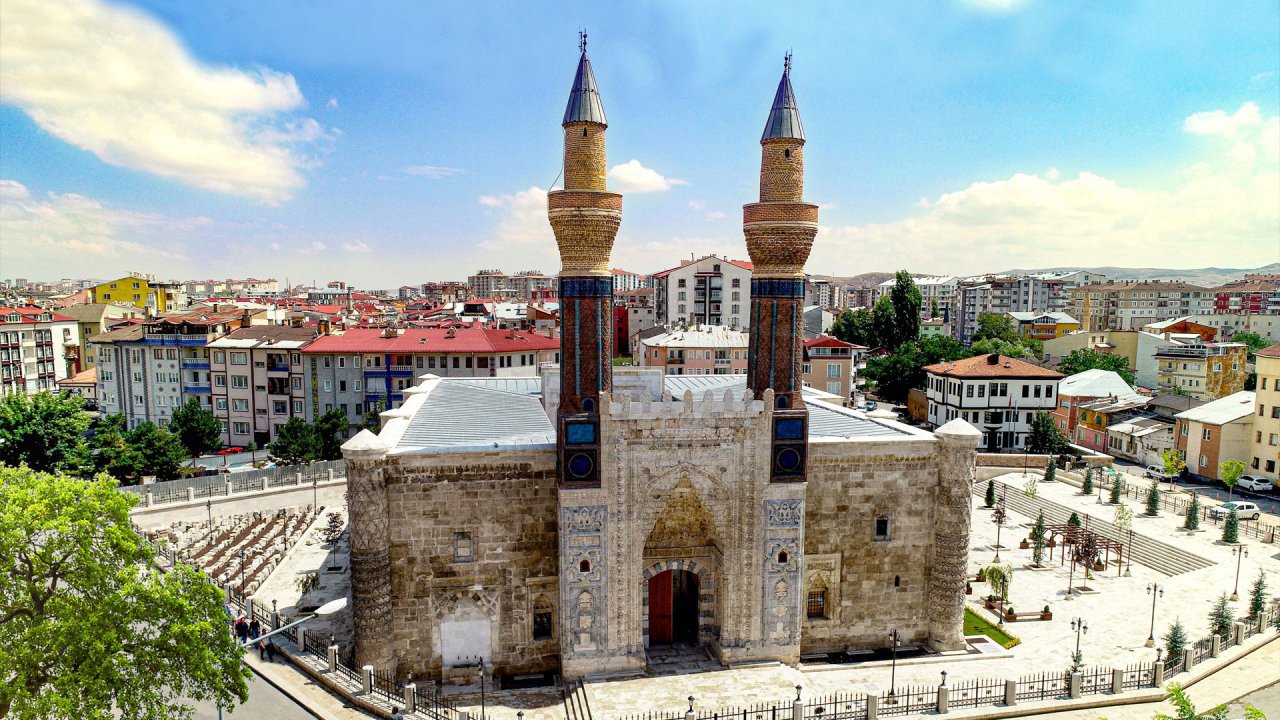
It is located in the city center of Sivas, in the Kaleardı neighborhood, east of the castle known as Topraktepe, within the outer walls. You can reach the structure on foot from Kent Square or by private vehicle.
Also known as the Sahibiye Madrasa, the building is referred to as the Blue Madrasa and the Red Madrasa due to its turquoise-colored tiles (Evliya Çelebi, 1999, p. 122).
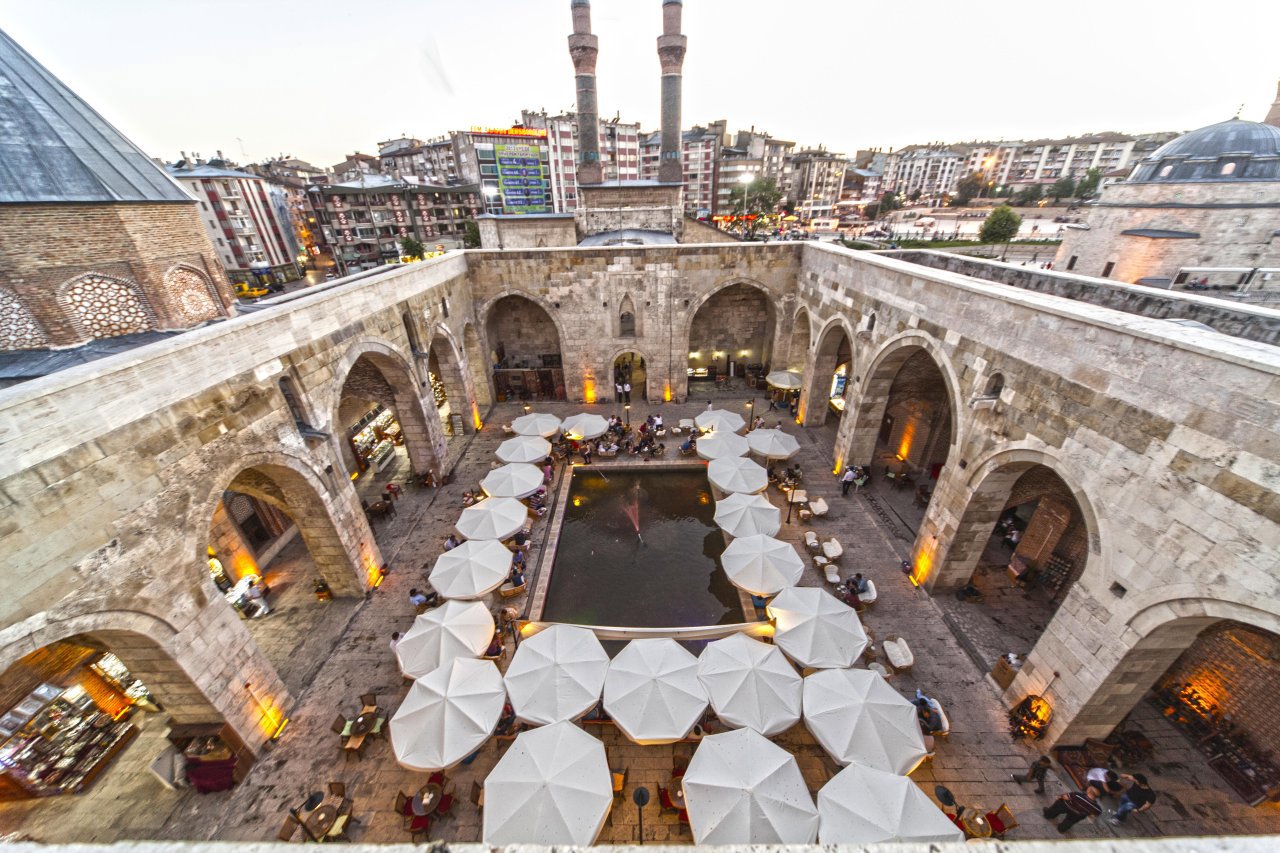
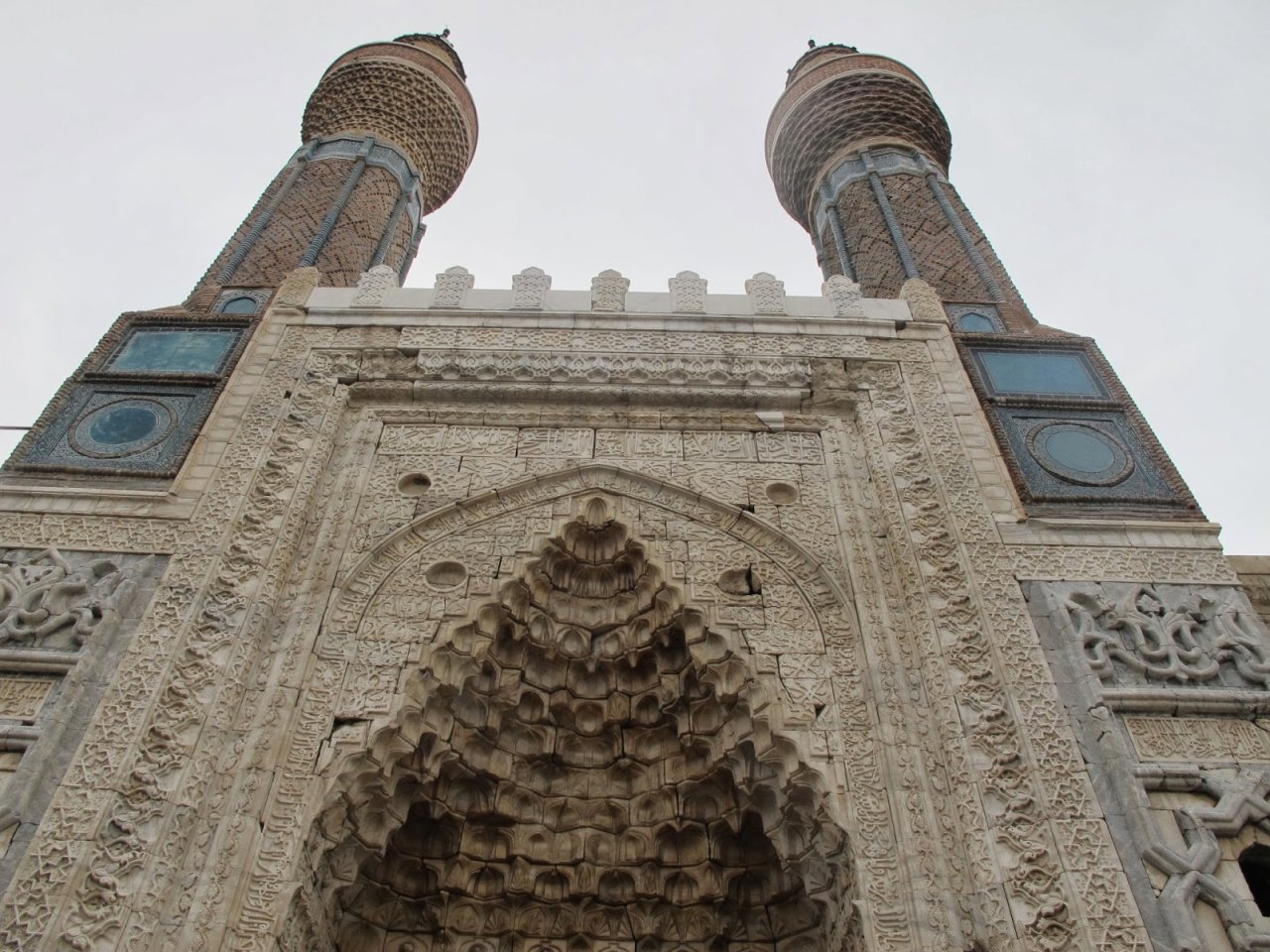
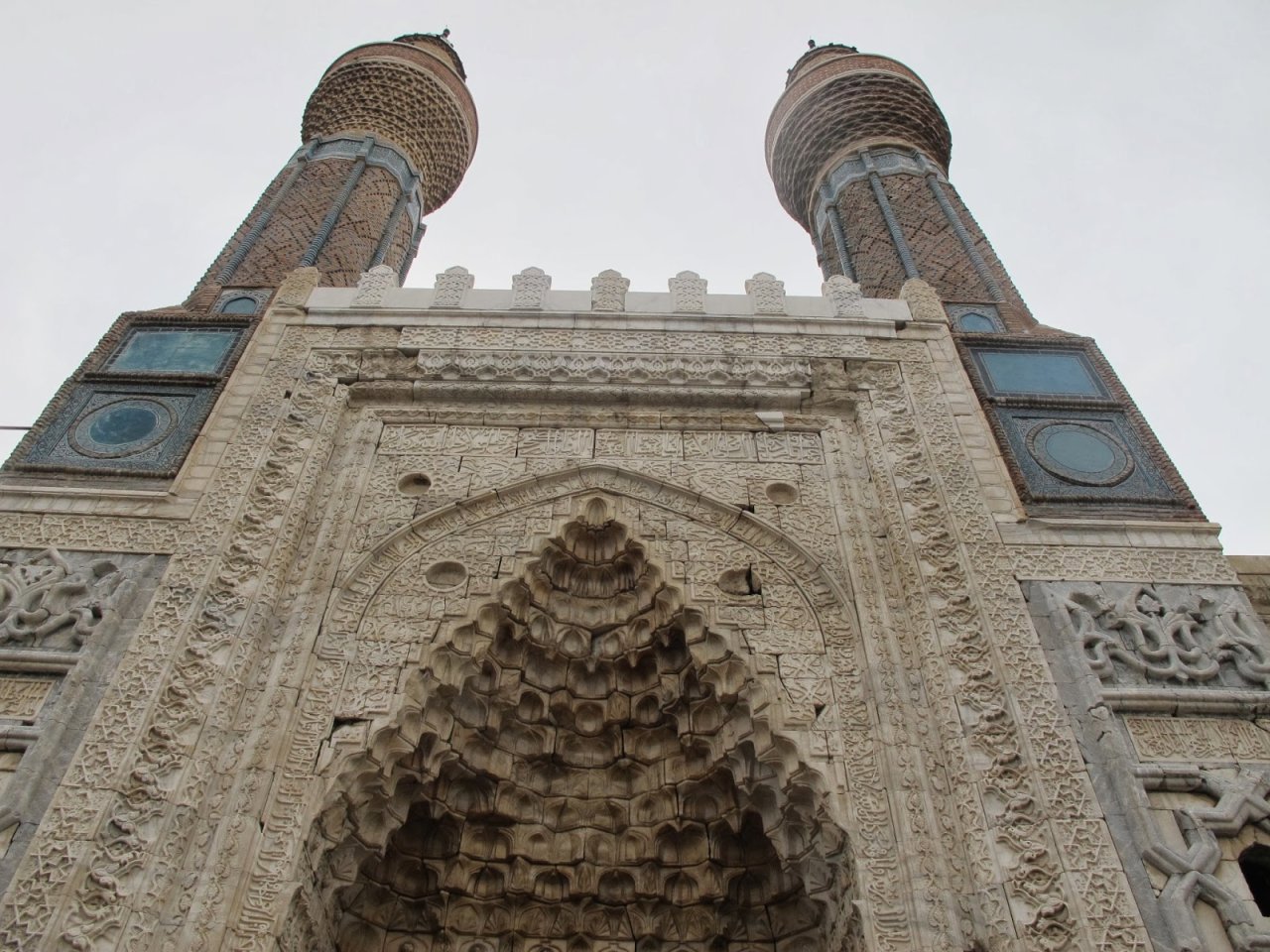
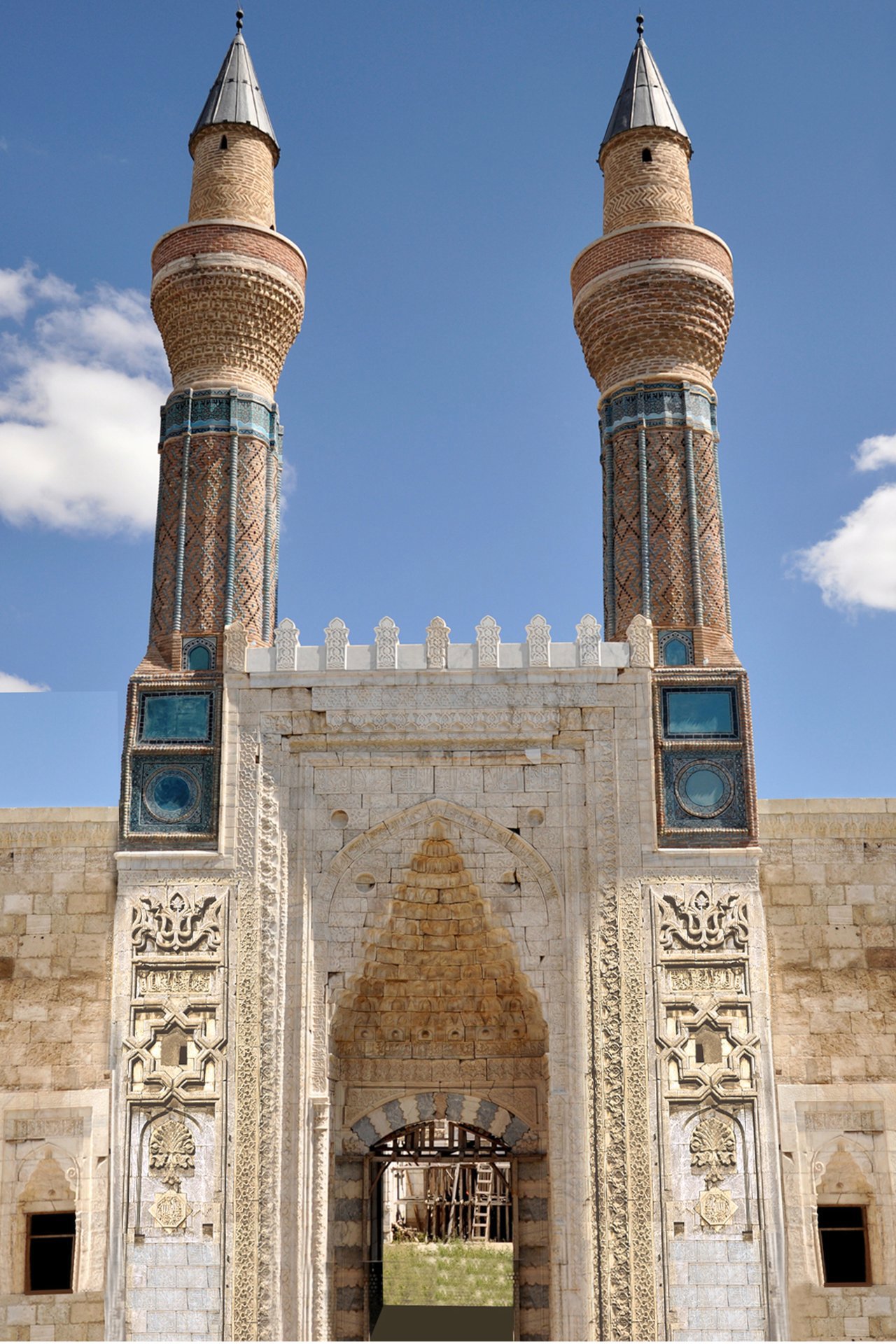
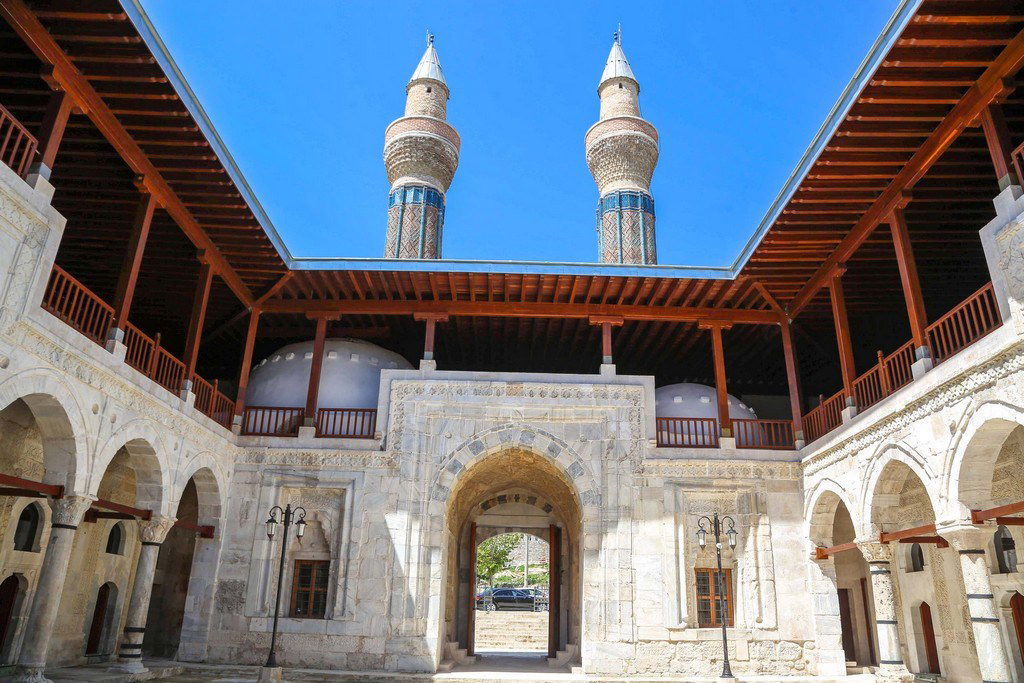
Before You Go: The madrasa has an approximately rectangular east-west orientation, is two stories high, and features an open courtyard. It has arcades on both the north and south sides and four iwans. The courtyard measures approximately 14.50 x 24.25 m. The most striking feature of the madrasa is the main entrance located on the west facade (Figure 1.10a). The madrasa is entered through a low-arched doorway at the main entrance, shaped with two-tone stonework. In addition to geometric and floral motifs on the borders surrounding the doorway,
, and the Tree of Life motif is visible on the portal itself. The spandrels of the arch are filled with a decoration consisting of animal heads.
The two minarets built above the main entrance give the structure its monumental appearance. The bases of the minarets are integrated with the main entrance and are symmetrical. The minaret shafts are decorated with zigzag motifs using semicircular turquoise-glazed bricks and turquoise tiles.
On the facade, to the left of the main entrance, there is a three-spouted fountain with a cloverleaf-shaped arch, and at the corners, there are two corner towers adorned with geometric and floral relief motifs in two sections (Sözen, 1970, pp. 43–44).
Sixteen student rooms are arranged symmetrically in the north-south and west wings of the courtyard. The two halls on either side of the main iwan, which open directly onto the courtyard, were used as winter classrooms. Of the domed units flanking the entrance iwan, the one to the south is the mosque, and the one to the north is the dar al-kurra; the staircases leading to the minarets also access these rooms.
Key Features of the Site:
The building is also known as the Gök Madrasa, Sahip Ata Madrasa, and Sahibiye Madrasa. According to the inscription on the madrasa’s main gate, it was commissioned in 1271 by Vezir Sahip Ata Fahrettin Ali (Fahreddin Ali b. Hüseyin Sahip Ata) during the reign of Gıyaseddin Keyhusrev I. Additionally, the inscription on the panel above the pilasters at the corners of the side niches of the main entrance gate mentions the name of the building’s architect, Kaluyan el Konevi (amel-i üstad Kalfryanül-Konevi) (Sönmez, 2000).
There is a remarkable madrasa known as the Kızıl Medrese (Gök Medrese)—a house of learning unlike any other ever built or that could ever be built in the Islamic world. When Timur saw it, he was thrilled and marveled at the building’s design. The castle gate
—a gate so high that it leaves anyone who sees it utterly spellbound. The master craftsman has adorned the high thresholds on either side of this gate with the shapes of flowers created by God in such a way that it astonishes the beholder. This madrasa must be seen and its story told far and wide. Inside the madrasa, there are 80 rooms spread over two floors. The students
study on the lower floors in winter and on the upper floors in summer. In the past, its revenues were secured in such a way that, thanks to the endowment, students were served eight varieties of delicious meals twice a day in porcelain bowls (Evliya Çelebi: “God has bestowed the blessing of Abraham upon the bounties of Sivas.” All historians have called the city of Sivas the “Mother of Cities.” Indeed, this is true. Even if there were a famine in Arabia, Anatolia, and Greece, this city’s grain would be enough for everywhere
sufficient. It could even feed Macedonia if necessary. Its people are joyful, its buildings are beautiful, its agriculture is abundant, and it is a festive city
abundant, with springs and streams in every direction—it is a city of celebration. It is a beautiful city worthy of praise in every respect.