 Back
Back
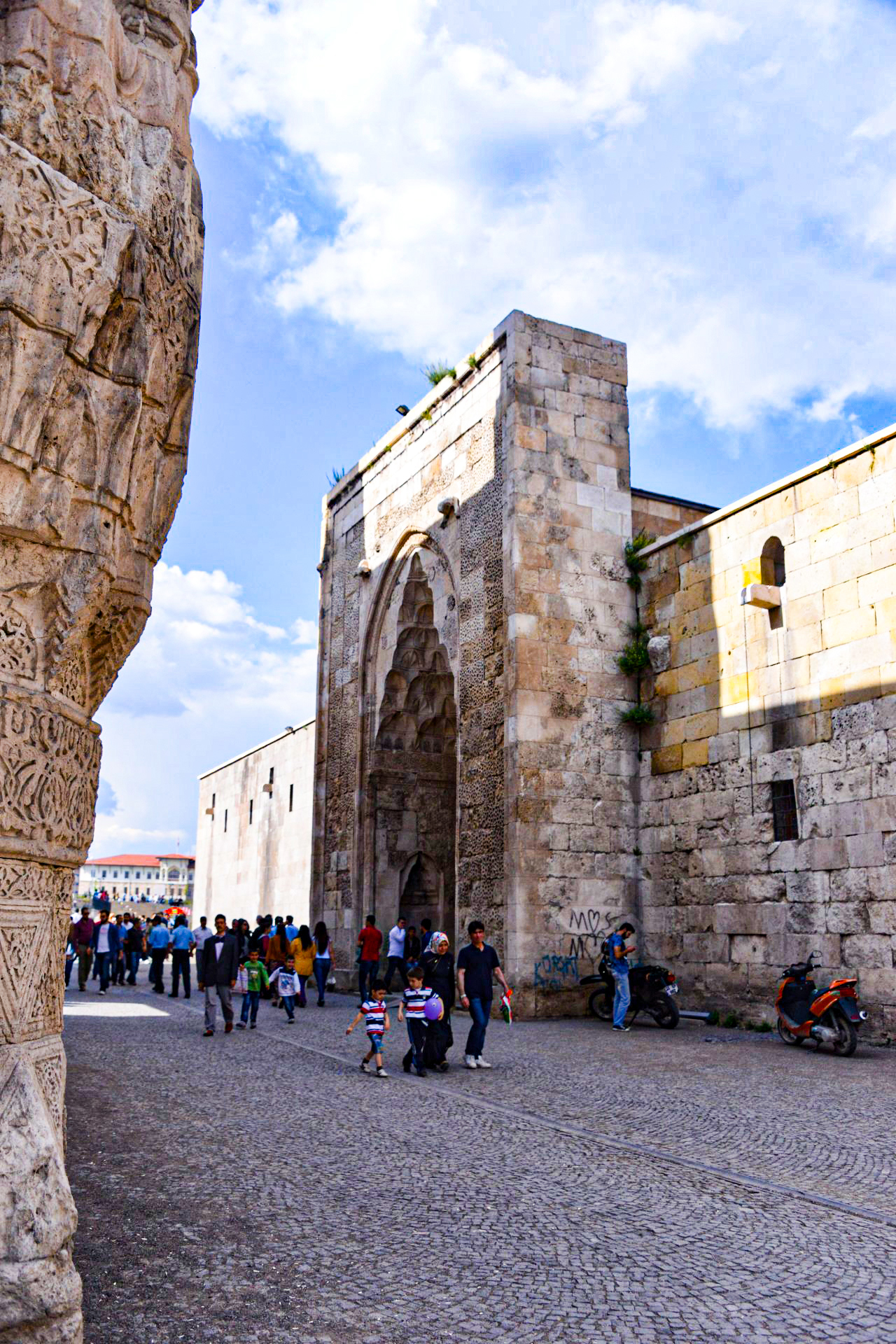
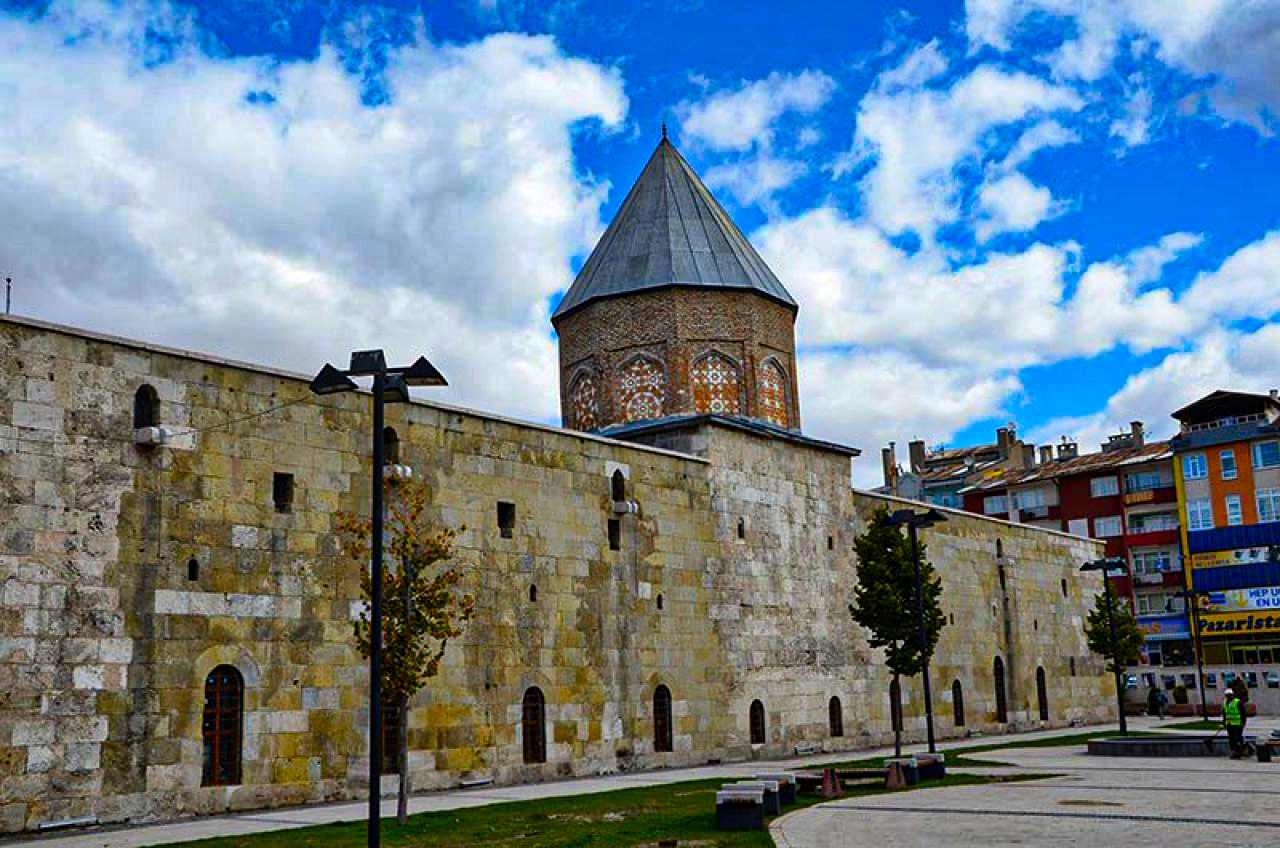
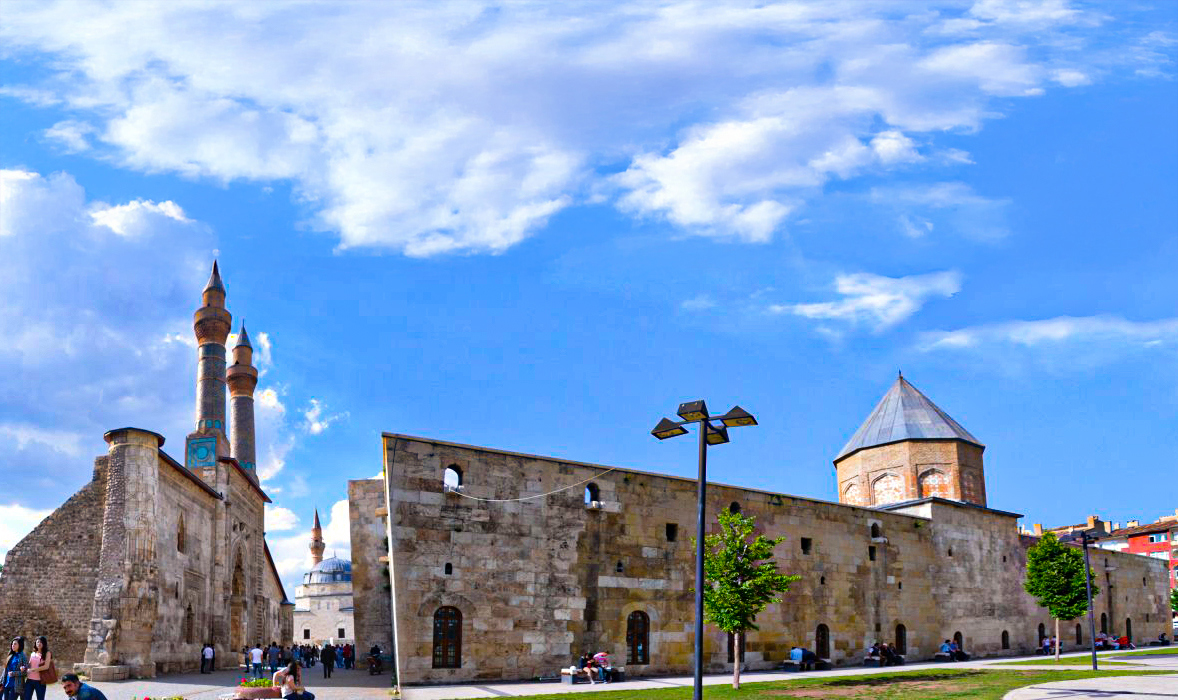
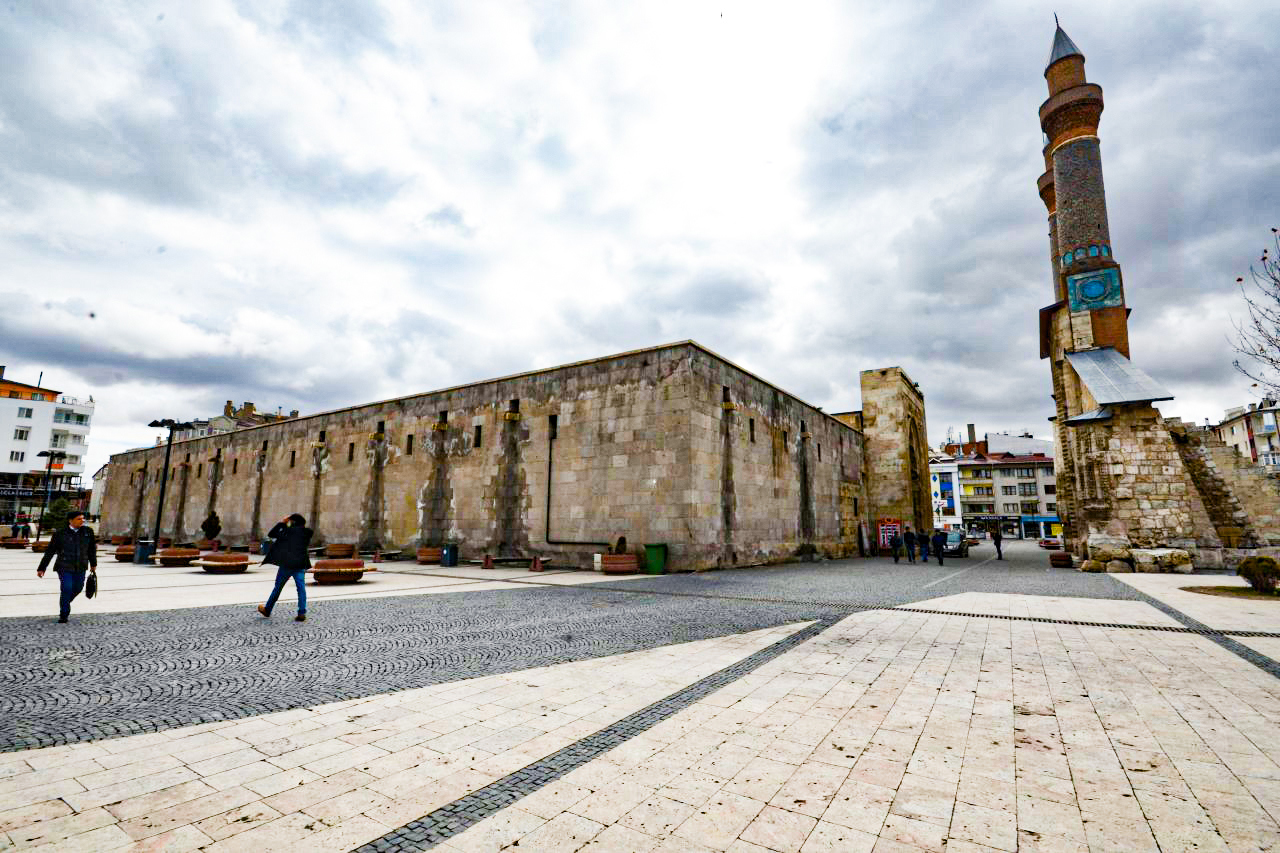
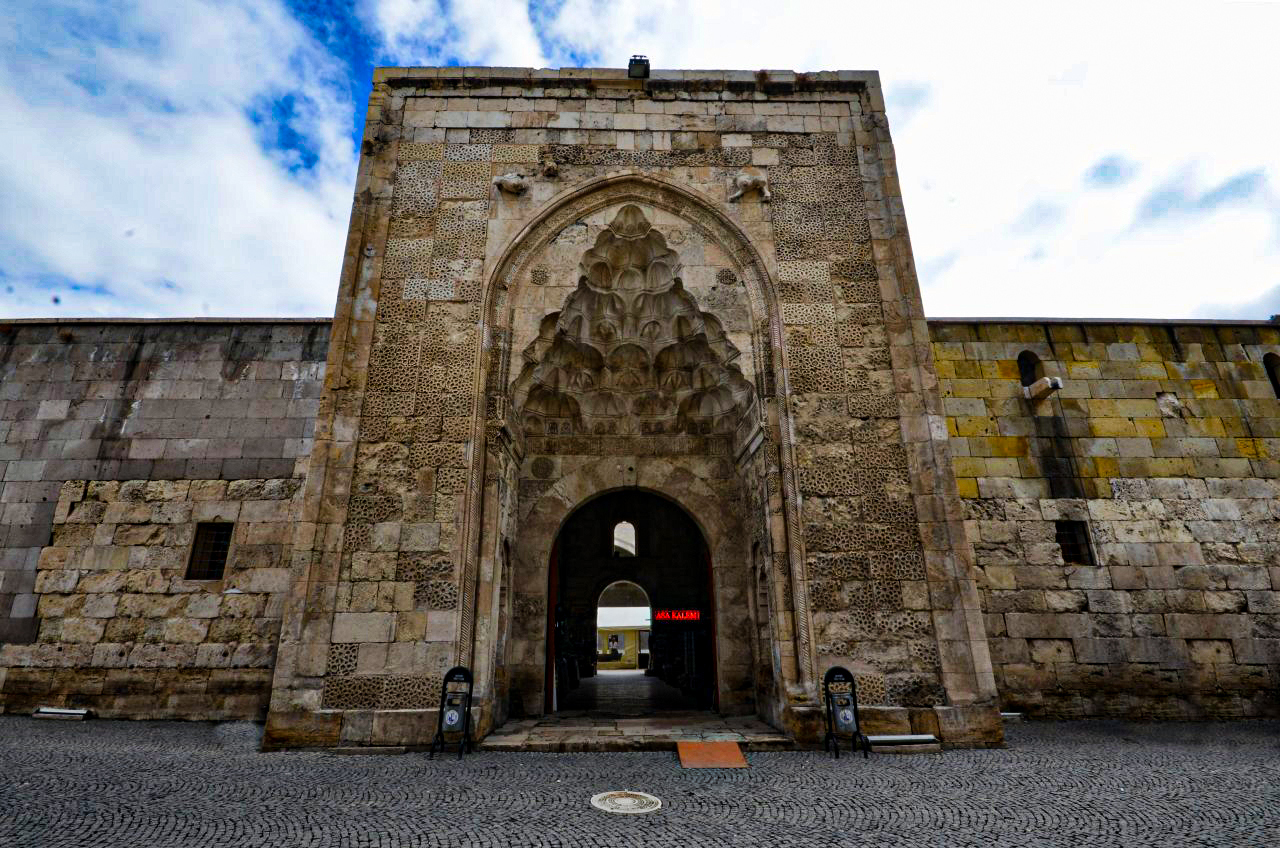
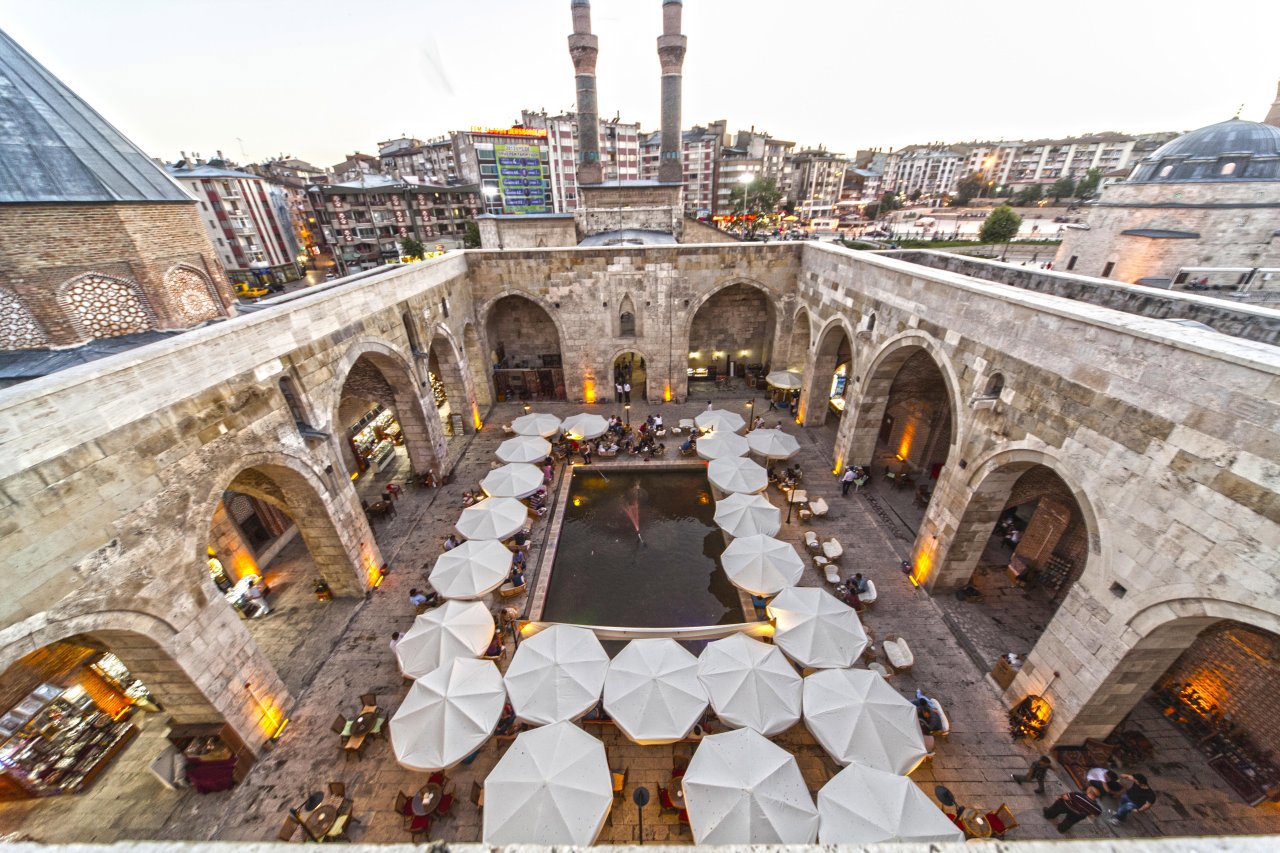
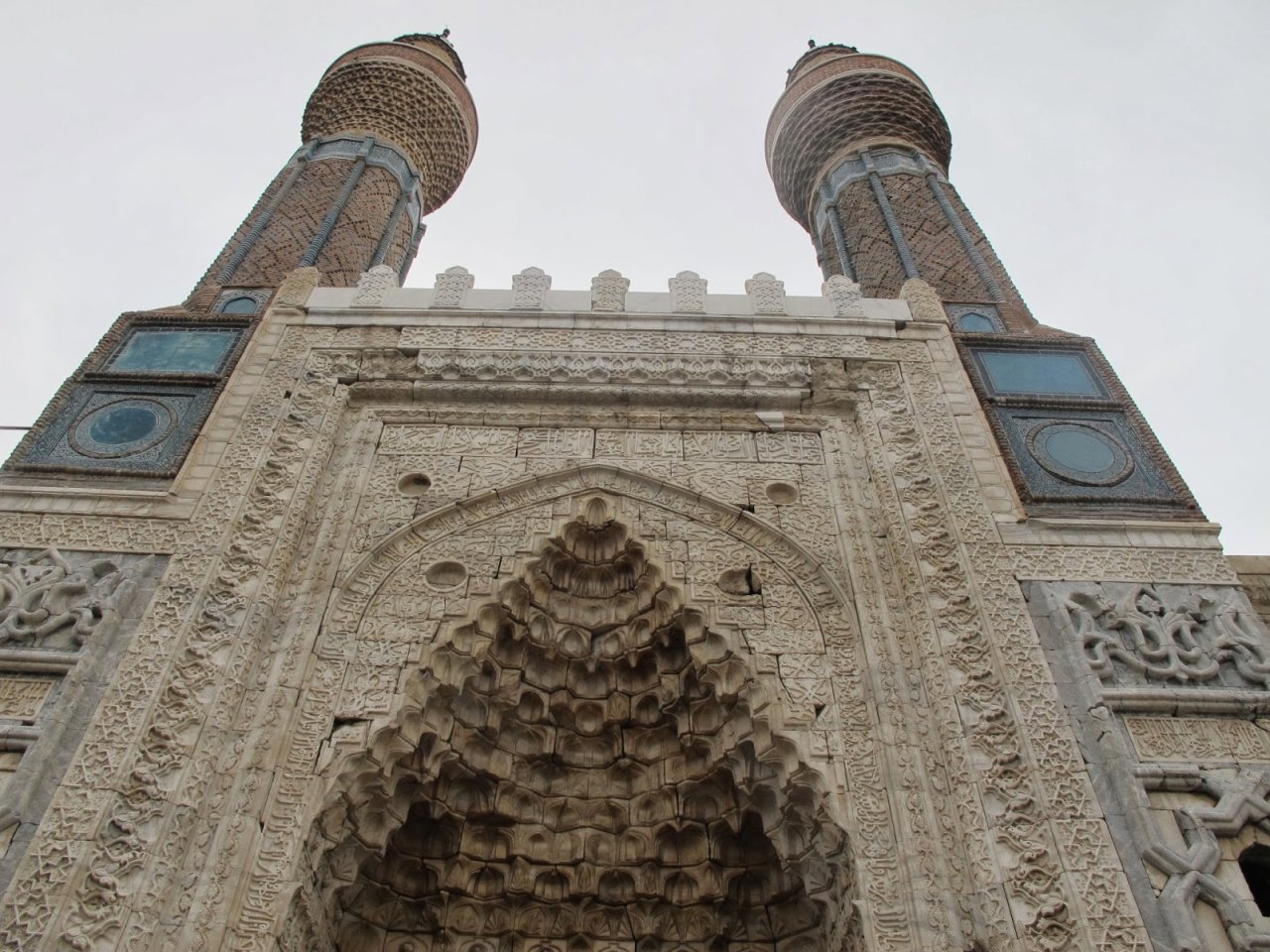
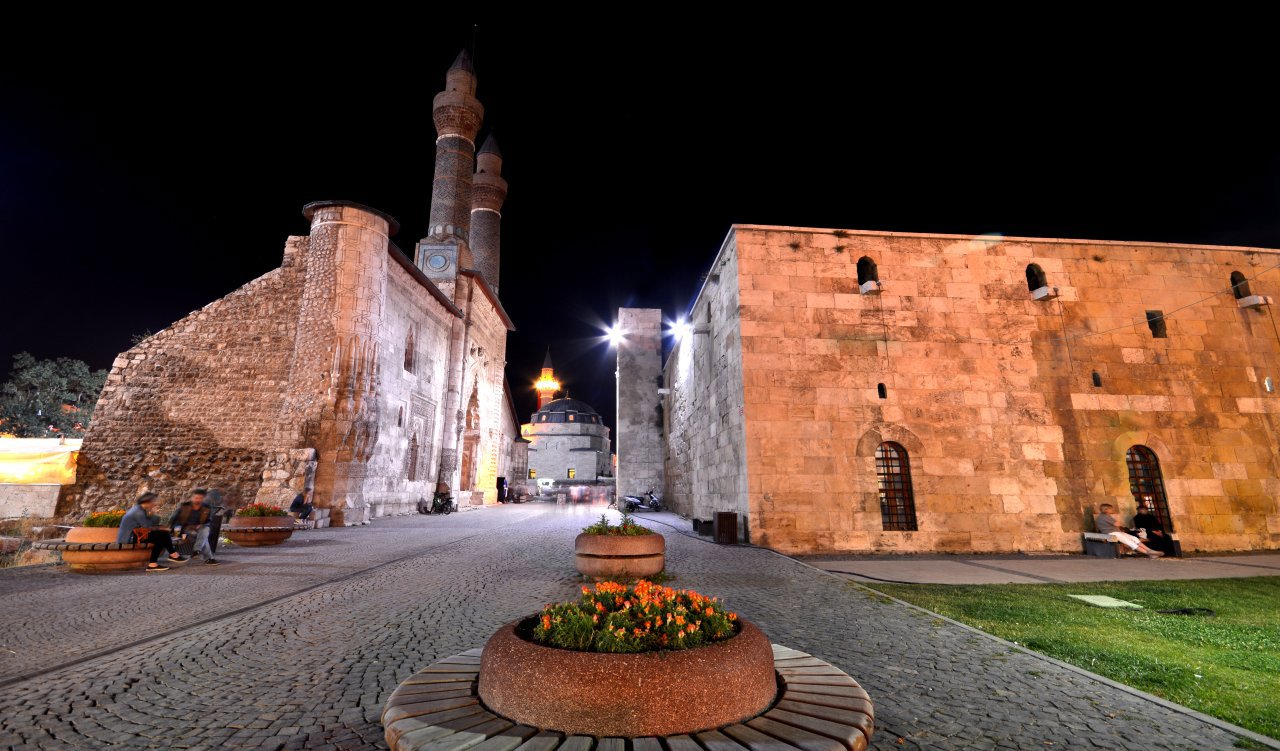
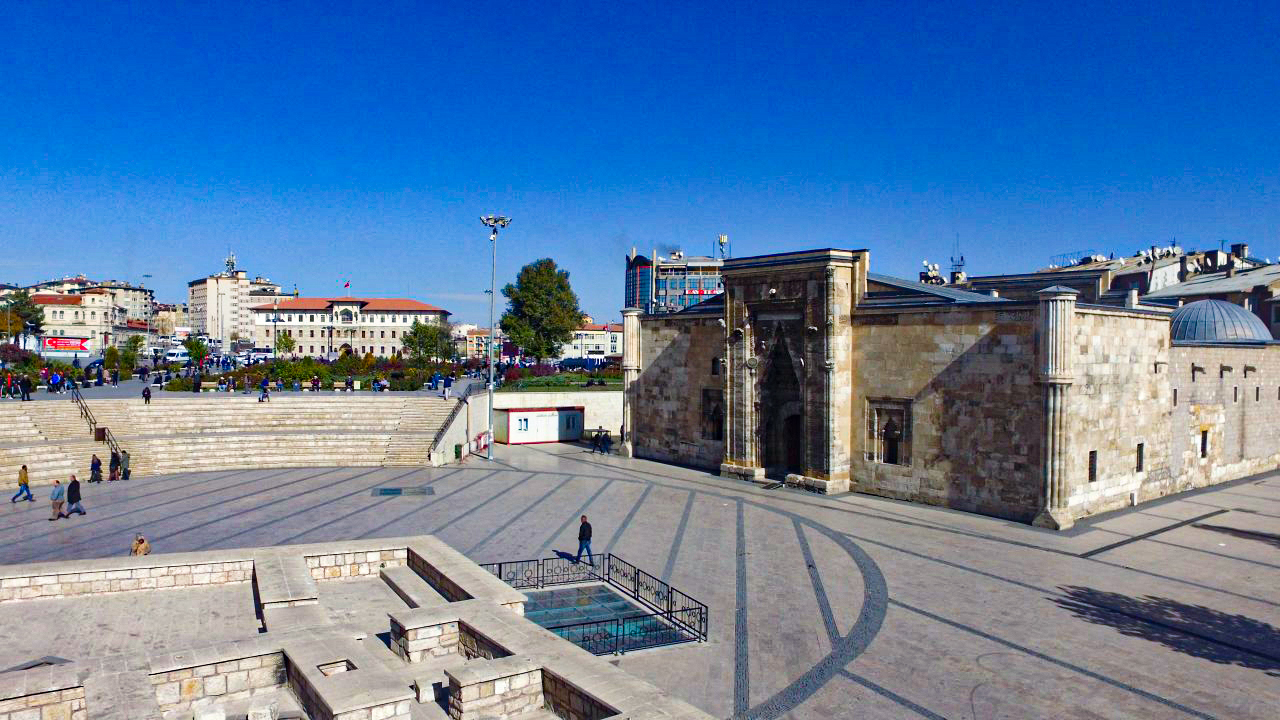
Built in Sivas in 1217 (AH 614) by Izzeddin Keykavus, this structure is one of the most important hospitals of the Anatolian Seljuk period. Today, it is located in Sivas’s city square. The madrasa, situated directly across from the Double Minaret Madrasa, is entered through a portal that is higher than the outer wall and projects outward.
You can reach the madrasa, located in Sivas’s city square, by public transportation or by private vehicle. Within the same area of the city square, you’ll find the Governor’s Office (City Museum), the former Gendarmerie Building, and other Seljuk madrasas.
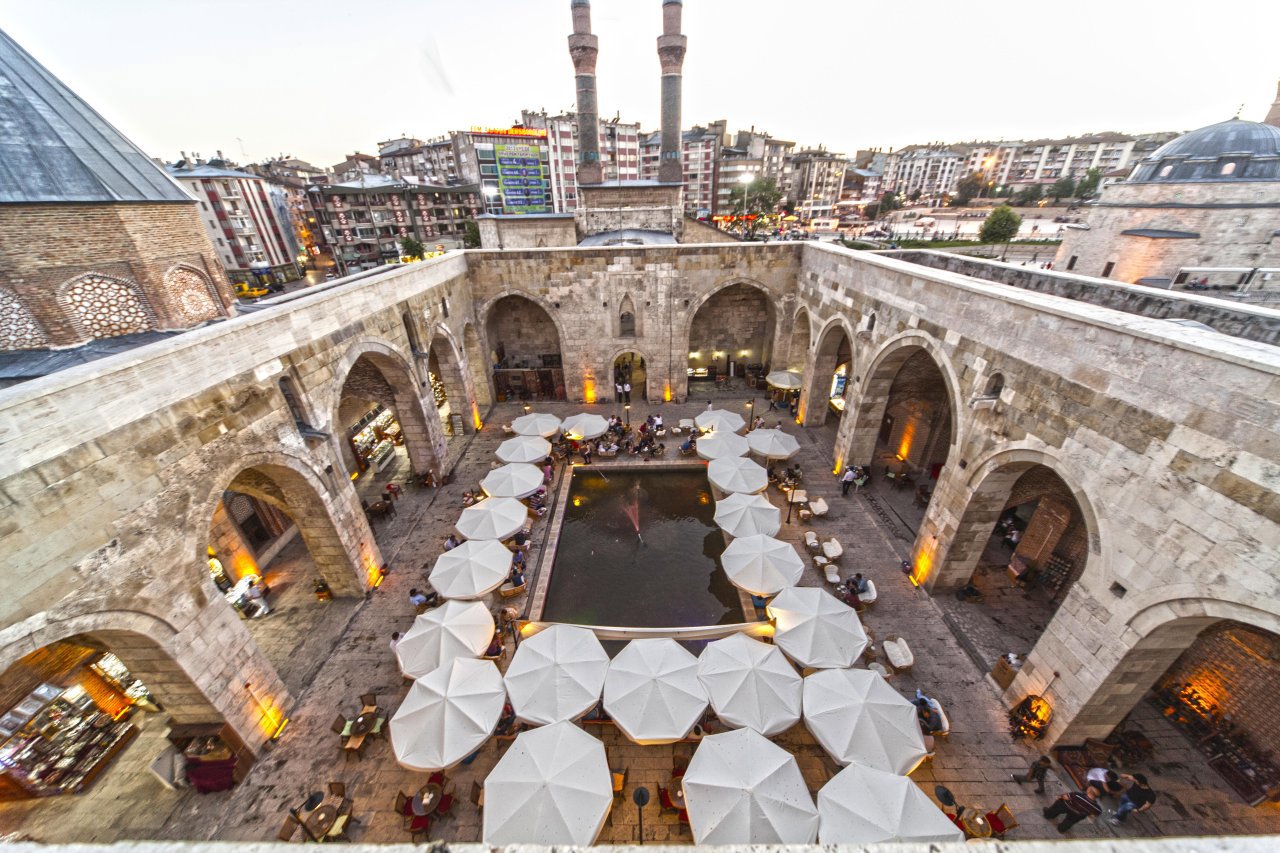
Measuring approximately 48×68 m and resting on a rectangular foundation, the structure is considered “Anatolia’s largest hospital.” The building features a single-story, four-iwan, arcaded open courtyard plan. It consists of a spacious courtyard with a central pool, vaulted arcades surrounding the courtyard, and student cells behind the arcades. Large domed classroom halls are situated on either side of the main iwan.
In the madrasa’s four-iwan plan, centered on the open courtyard’s axes, the side iwan was closed off following the death of Izzeddin Keykavus and converted into a mausoleum; its founder, Izzeddin Keykavus, was buried here. The Darüşşifa and the mausoleum were combined within the same complex to form a multifunctional structure.
The Sultan’s death is described in detail in contemporary sources: “As his tuberculosis attacks intensified, the doctors said that the water of Sivas would not be good for the Sultan, so he was taken to Malatya-Viranşehir. Although water from the Euphrates was brought to him by hand every day, he could not find a cure and was taken to the Darüşşifa he had built in Sivas during his lifetime. It is noted that he bequeathed that a rubai he had recited in Persian during his illness be inscribed on the door of his mausoleum.”
After Sultan Alaeddin Keykubat ascended the throne, the remains of Izzeddin Keykavus were buried in the Sivas Darüşşifa (Ibn-i Bibi, 1941, p. 216). The Persian poem attributed to the sultan is inscribed on the entrance gate of the mausoleum in ornate white calligraphy on a blue background.
The single-line inscription on the main gate of the Darüşşifa reads: “The victor by the grace of Allah, the glory of religion and the world, the pillar of Islam and the Muslims, the sultan of land and sea, and the crown of the Seljuk dynasty, the father of conquest, the representative of the Commander of the Faithful, Keykavus, son of Keyhüsrev, ordered the construction of this Darüş-Şifa in the year H. 614/M. 1217 for the sake of Almighty Allah’s pleasure.” The inscription also refers to the ports of Sinop and Antalya, which he conquered.
We who have left the world behind and departed
We sowed the sorrows of the heart and reaped mourning
From now on, the watch is yours.
We have fulfilled our duty and moved on.
(Ibn-i Bibi, 1941, p. 217)
The founder of the structure, Izzeddin Keykavus, was the eldest son of Giyaseddin Keyhüsrev. Upon hearing of his father’s death, he set out for Konya, only to learn that his brother, Alaeddin Keykubat, was also on his way there. During the reign of Izzeddin Keykavus I (1211–1220), who ascended the throne following a struggle between the two brothers, Seljuk political and cultural life was extremely vibrant.
The period marked the rise of the Seljuk state, a trend that began under his father, continued during his own reign, and persisted under his brother, I. Alaeddin Keykubad (1220–1237), who succeeded him. Sultan Izzeddin Keykavus I expanded Seljuk territories by conquering Sinop in 1214 and Antalya in 1216, and he intensified public works projects.
During Keykavus’s reign, Sivas served as a major political and cultural center alongside the capital, Konya. It was precisely during this period that he commissioned the construction of the hospital in Sivas that bears his name (Figure 1.5). As indicated by its inscriptions, the building served as a hospital specializing in eye diseases (Eser, 2017, p. 57; Uzunçarşılı, 2005, pp. 116–119).
Ibn Bibi describes the building’s decorations as follows: “He had the door of the mausoleum located in the garden of the Sivas Hospital—which had previously been built by his decree—carved and decorated, inscribing on that door: ‘Allah as God, Islam as the religion, the Prophet Muhammad as the Prophet, the Qur’an as the guide, and the Kaaba as