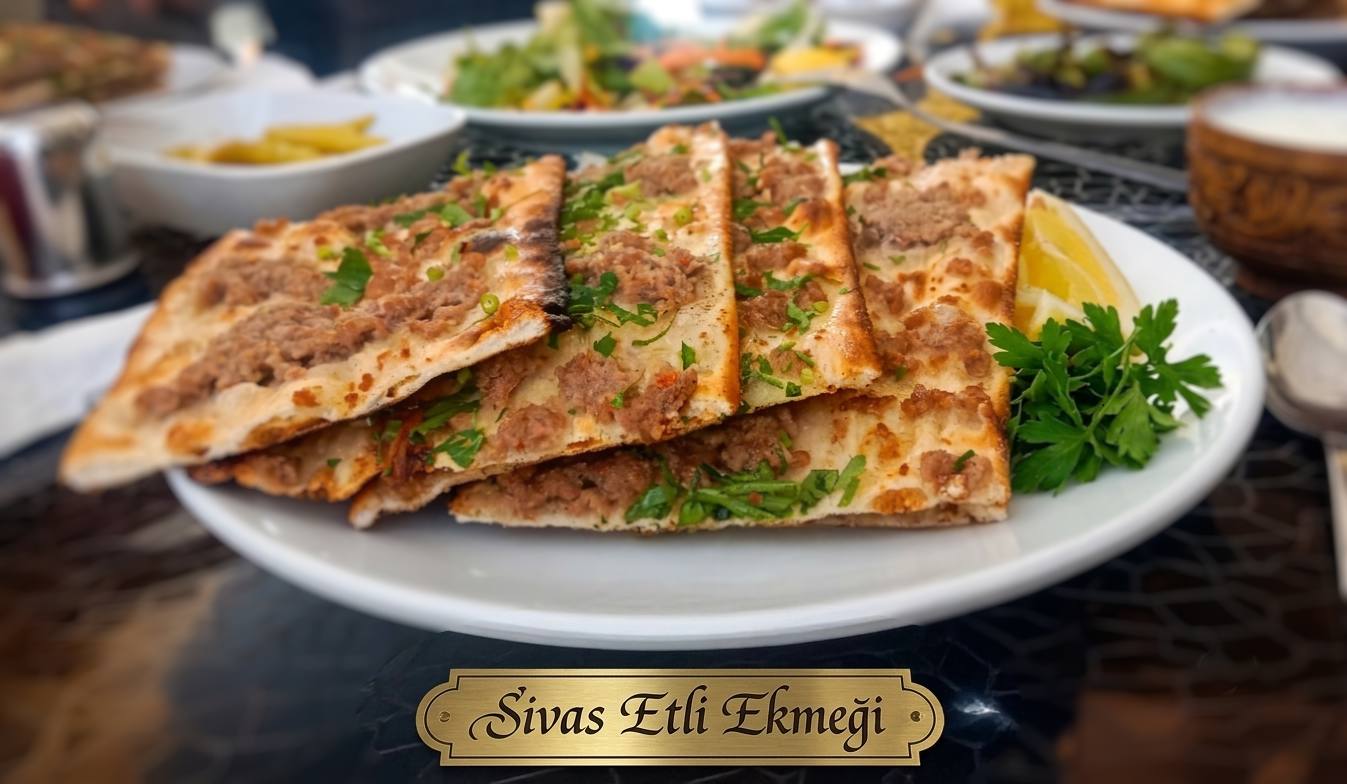
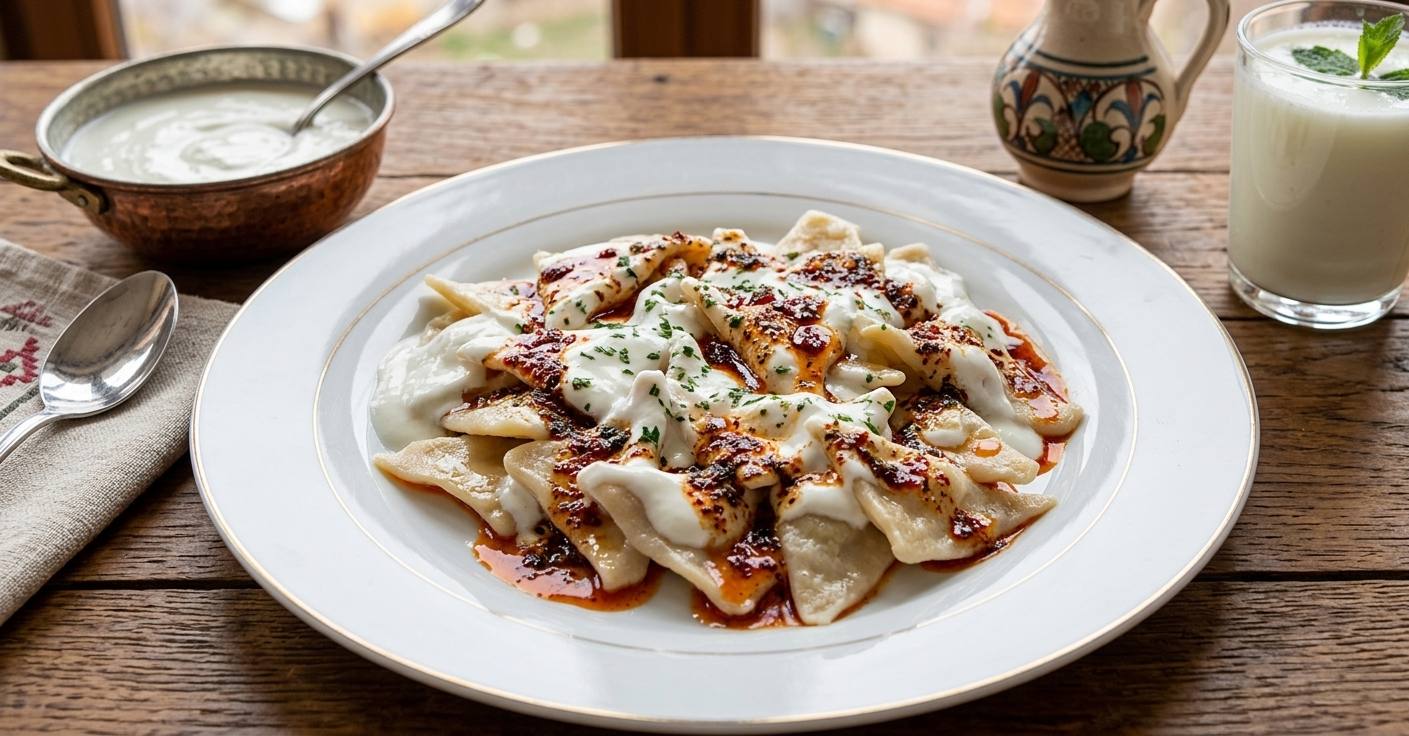
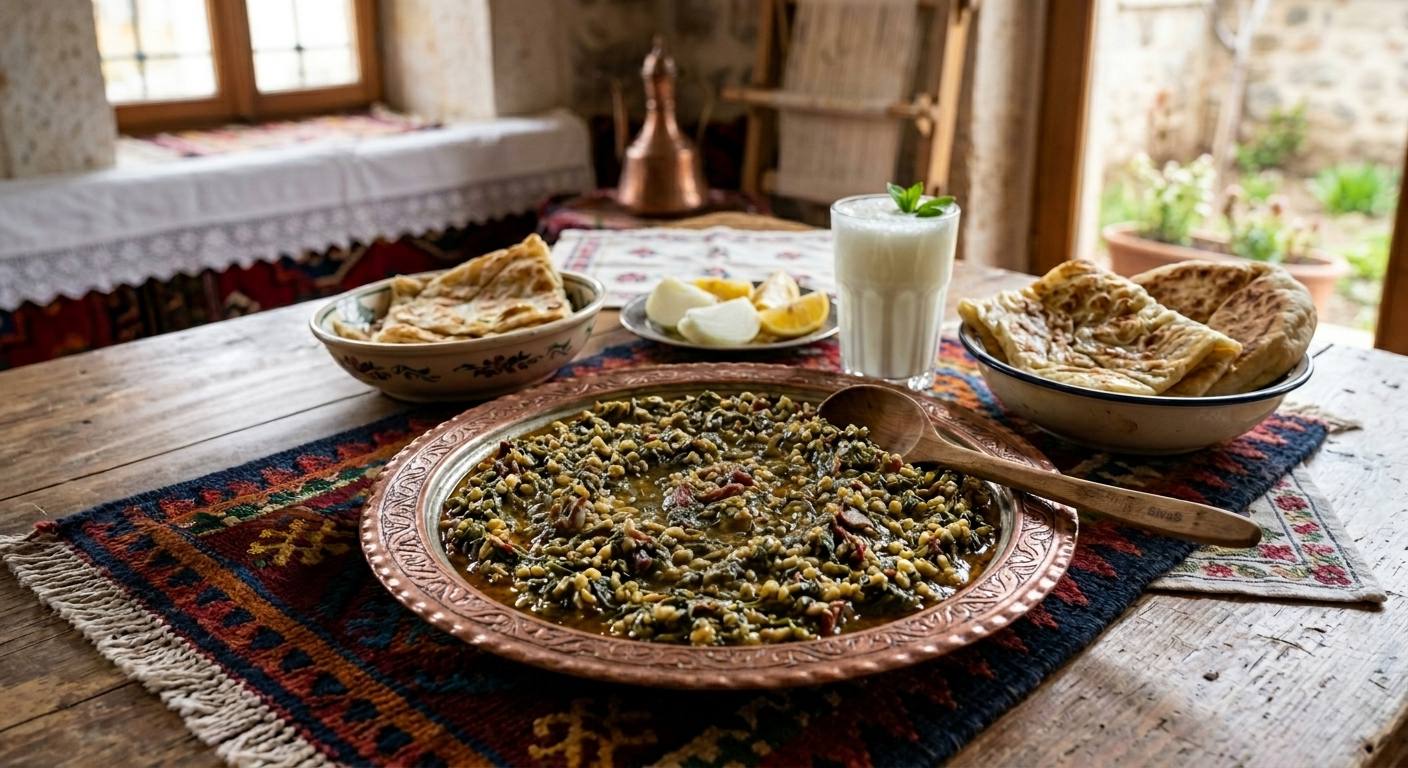
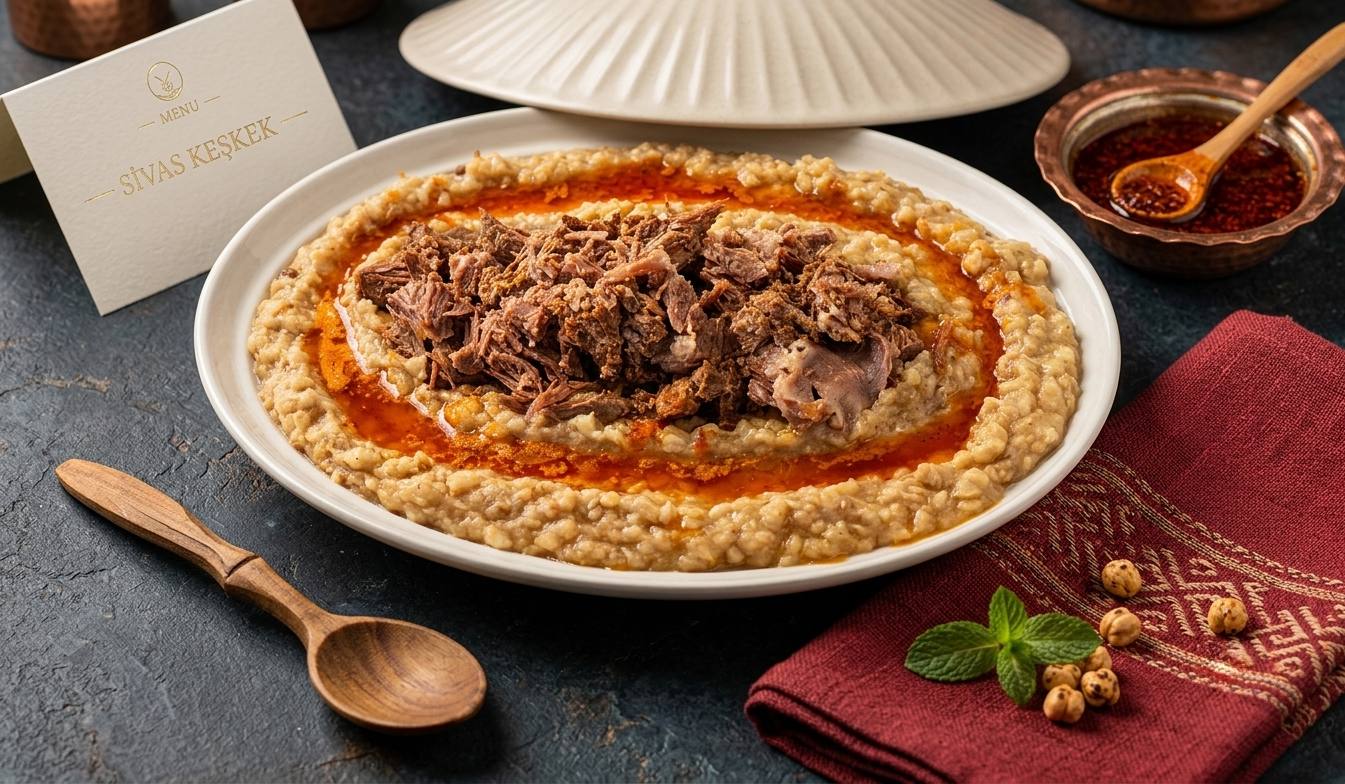
This gastronomic diversity is evident in a wide range of dishes, from meat dishes to olive oil-based dishes, and from soups to baked goods. One of these traditional dishes, keşkek, is made primarily from matured wheat and holds an important place in Anatolia’s deep-rooted culinary heritage (Figure 6.10). Keşkek is prepared especially on holiday mornings, at birth and circumcision ceremonies, weddings, and religious celebrations; it symbolizes abundance, sharing, and social solidarity (Deniz and Yavaş, 2020).
Keşkek, which has held an important place in culinary traditions dating back to the Seljuk and Ottoman periods and continuing to the present day, is a traditional festive dish prepared especially in the Sivas cuisine for weddings and various communal celebrations (Akgül and Öncel, 2024). A reflection of Anatolia’s deep-rooted gastronomic culture, this dish is prepared using a technique that relies on the integration of ingredients through the slow, prolonged simmering of wheat and meat over low heat. In this regard, keşkek is considered one of the most significant dishes in Anatolian cuisine, symbolizing patience, hard work, and a collective approach to food production.
In the Sivas region, keşkek is known as a dish prepared with bulgur, yogurt, water, and butter, differing from meat-based keşkek recipes found in many other regions of Turkey. However, in the traditional keşkek recipes prepared in many regions of Anatolia, the cooking process consists of specific stages.
First, yarına (cracked wheat) and chickpeas—soaked overnight—are placed in large pots with bone-in lamb meat, water is added, and the ingredients are simmered over low heat for a long time.
The aim of this process is to completely separate the meat from the bones and for the wheat to release its starch, giving the dish its characteristic consistency.
Once the cooking is complete, the bones are removed from the pot, and the mixture is traditionally pounded with a wooden tool called a “keşkek mallet.”
This process ensures that the meat fibers and wheat grains blend completely, giving the dish a paste-like and homogeneous consistency.
Once the prepared keşkek is divided among plates, it is served hot with melted butter and red pepper sauce drizzled on top.
 Back
Back