 Back
Back
Sivas Çöreği
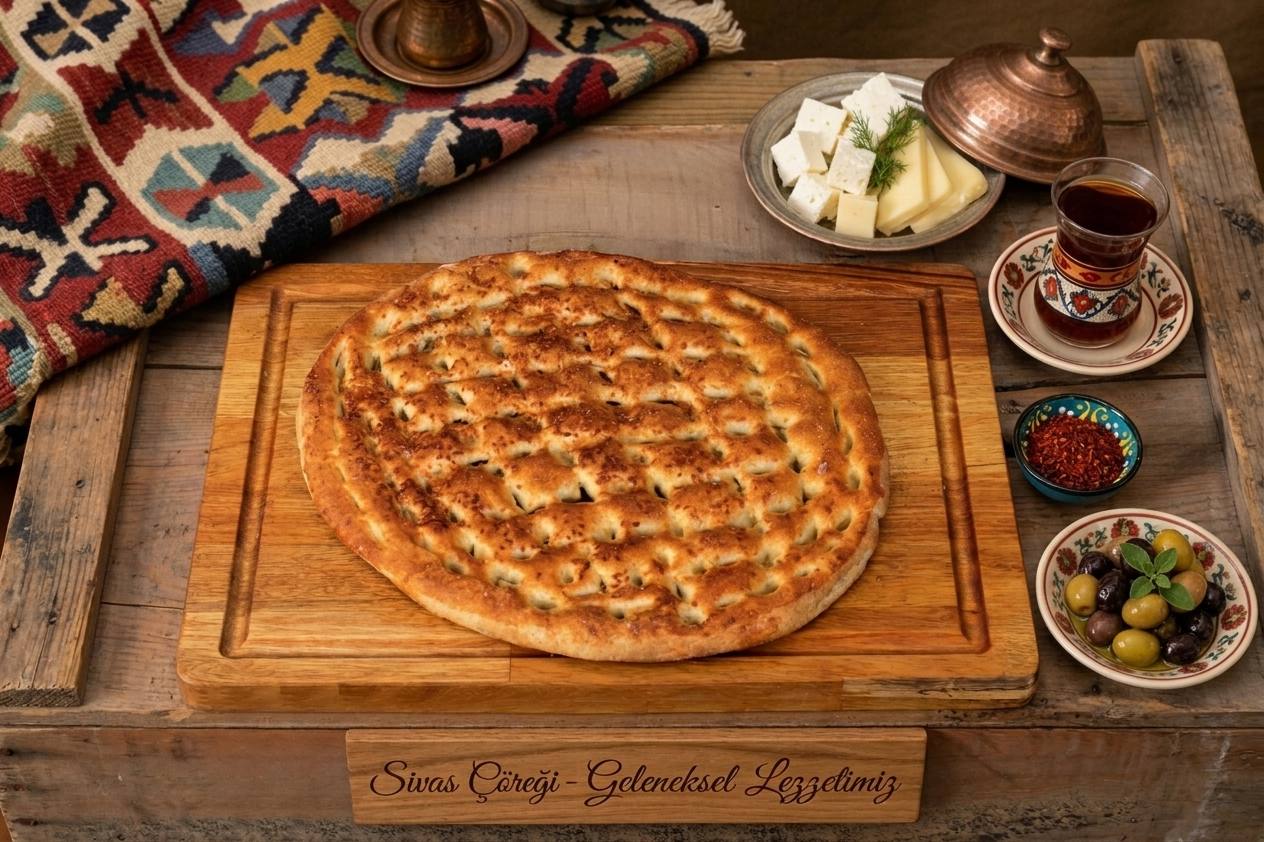
Sivas çöreği, one of the most famous regional delicacies of Sivas cuisine with a geographical indication, is an important part of the region’s culture.
227 views
Sivas Cuisine
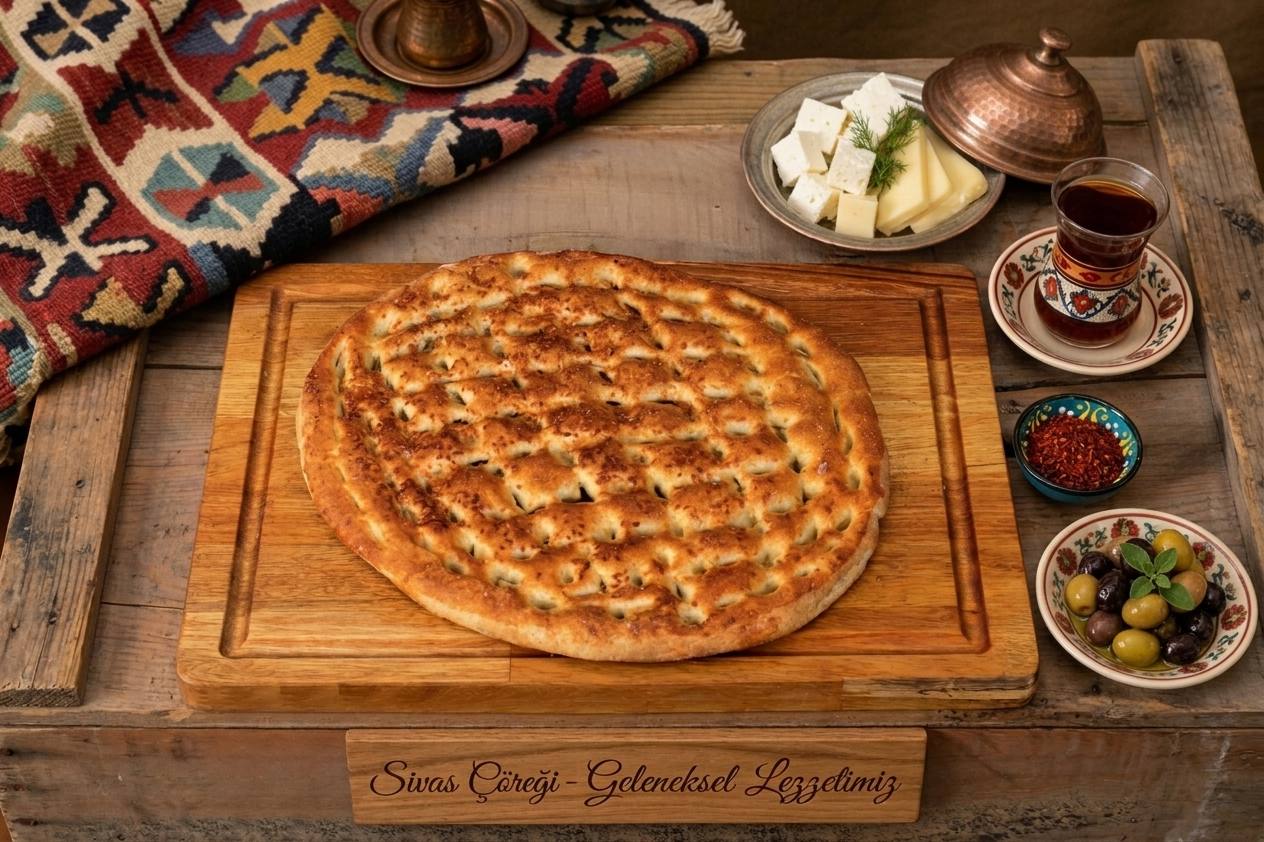
Traditionally made using flour derived from local wheat varieties grown in the Sivas region, this special baked good stands out for its unique flavor and preparation technique. The Sivas roll is generally considered a part of daily life in Sivas and is an indispensable part of breakfast in particular.
Among the characteristic features of the Sivas çörek are the sesame seeds covering its outer surface and its rich, buttery texture. Although the historical origins of the çörek are not fully known, some cultural studies suggest that its origins lie in Caucasian culture.
The preparation of this traditional delicacy begins with combining ingredients in specific proportions. To make the dough, 1 kg of flour, 250 gr. of vegetable oil, 500 ml of water, 70 gr. of fresh yeast, 35 gr. of salt, and 70 gr. of granulated sugar are kneaded together in a bowl. The thoroughly kneaded dough is set aside to rise until it doubles in volume. After rising, the dough is divided into equal portions weighing an average of 250 gr., and these portions are allowed to rest for 15–20 minutes. The rested dough portions are rolled out on a marble countertop using a rolling pin and shaped with tools such as a knife. The dough is typically shaped into a “clawed pide,” which is the most preferred and traditional form. Egg yolk is brushed onto the surface of the shaped dough to give it a shiny, appetizing appearance when baked, and sesame seeds are sprinkled on top. The prepared products are baked in neighborhood bakeries, usually using the high heat of a wood fire, until the tops turn a deep, pomegranate-like red. The wood fire imparts a distinctive flavor and traditional crispness to this pastry. This meticulous preparation and baking process elevates the Sivas çörek beyond being merely a food item, transforming it into a work of art and a piece of cultural heritage.