 Back
Back
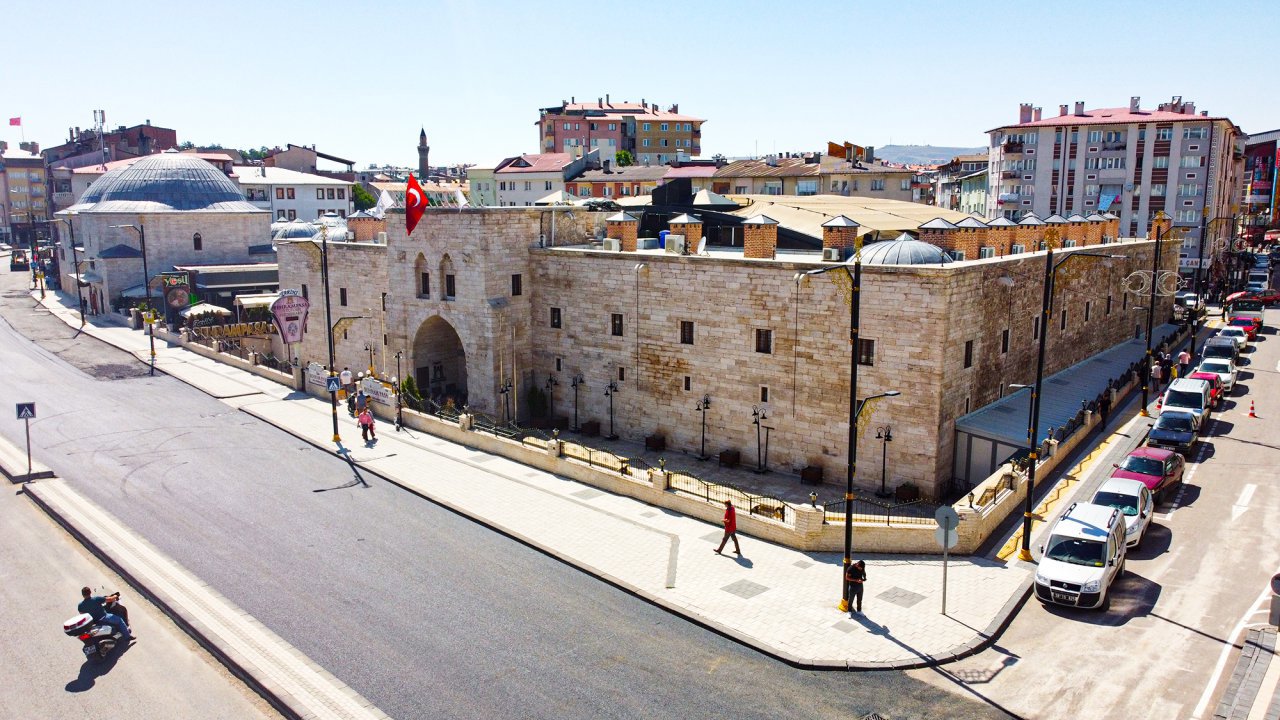
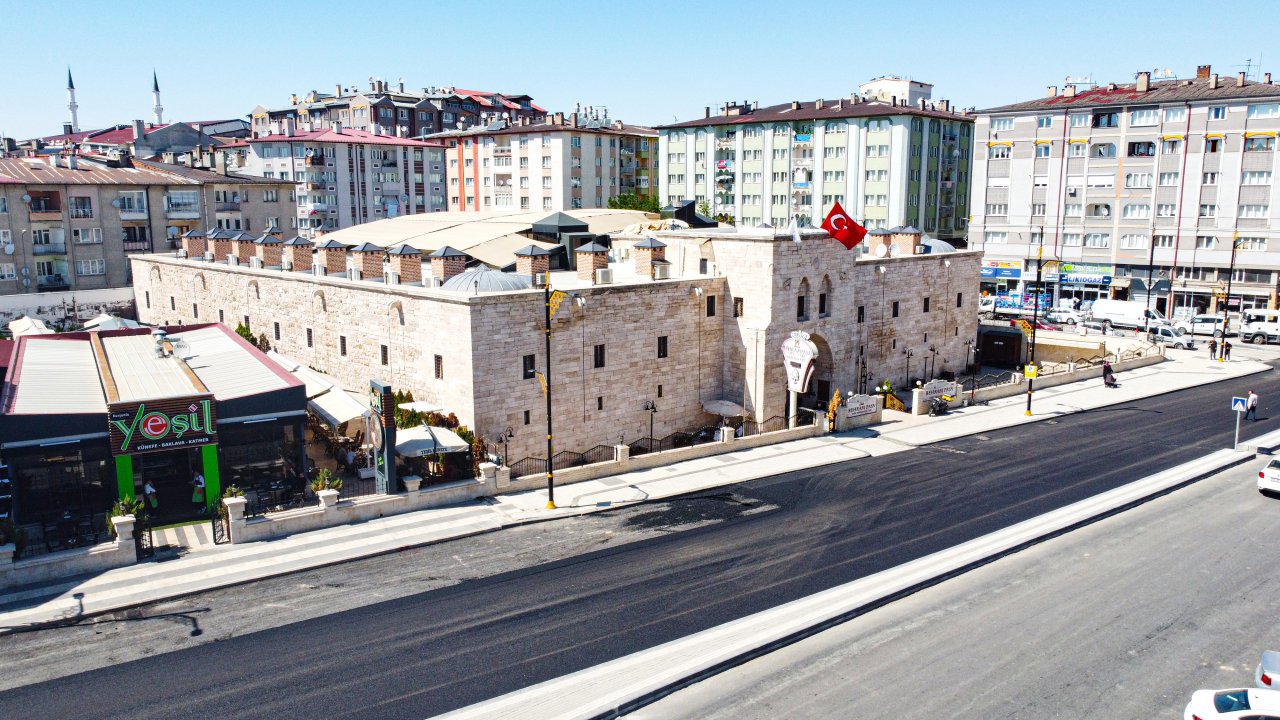
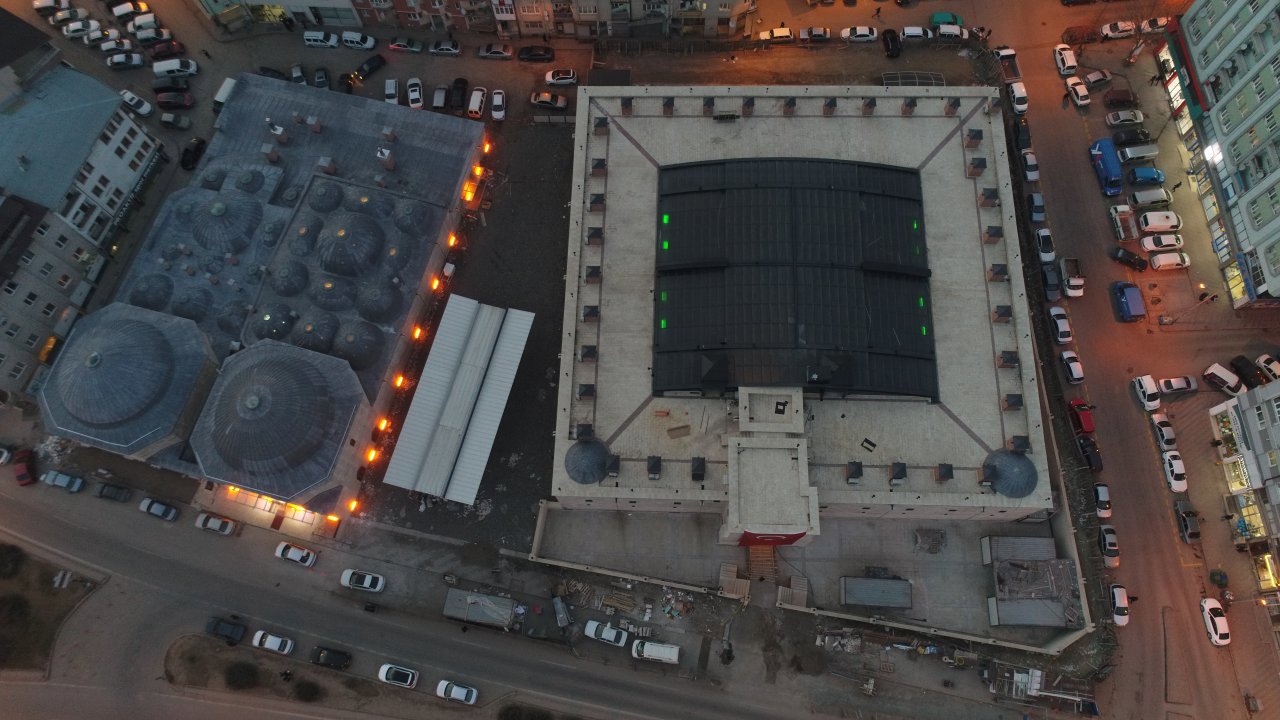
Where is it?
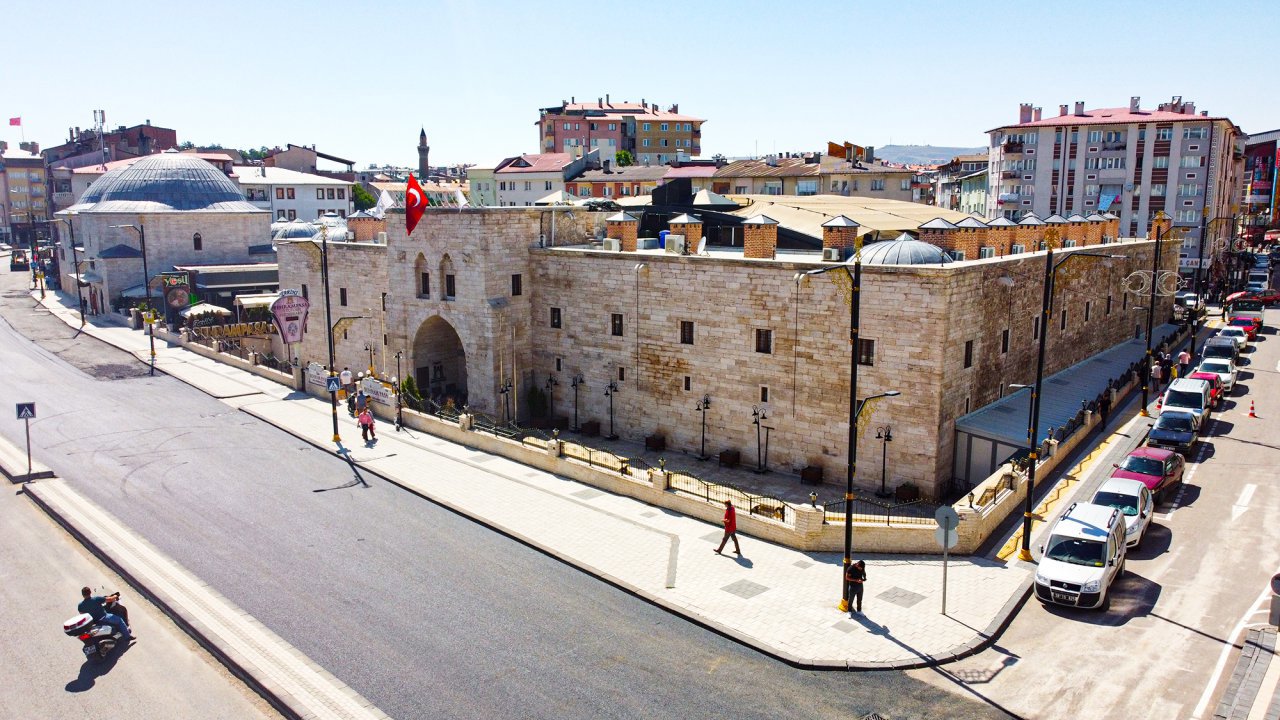
It is located in the center of Sivas Province, in the Paşabey Neighborhood, on Arap Şeyh Street, across from the teachers’ residence. Dating to the second half of the 16th century—a period when urban development in the Ottoman Empire intensified as a result of commercial activities—the Behram Pasha Inn stands next to the Kurşunlu Hamam, which was commissioned by Behram Pasha and takes its name from the lead-covered domes. (Bilget, 2009, p. 283).
How to Get There?
The structure can be reached on foot or by private vehicle.
Before You Go: It was built in 1576 by Sivas Governor Sağır Behram Pasha. It features an open courtyard with arcades and is two stories tall. Above the eastern entrance, next to the windows, there are two lion figures. The restoration inscription above the caravanserai’s entrance gate bears the tuğra of Abdulhamid II, the restoration date, the inscription “illa yahu” by Seyyid Muhammed Hamdi, the Hijri year 1316 (1898), and the inscription “Nişancı Sade Arif, who built that part for the sultan” (Bilget, 2009, p. 283).
Dating to the Classical Ottoman period and bearing the characteristics of that era, the caravanserai is arranged around a rectangular courtyard. It is believed that the layout of the two-story Behrampaşa Han, an inner-city caravanserai, was shaped by the urban extensions of the caravan route on which it stands and by the Murdar River, which flowed along the structure’s eastern edge during that period. Today, the facades of the caravanserai and the hamam face Arapşeyh Street (Karaman, 2023, p. 89).
The entrance iwan features a high pointed vault, emphasizing the building’s entrance. The caravanserai’s entrance door opens through a pointed-arch vault leading into the courtyard. The caravanserai’s courtyard on the ground floor is surrounded by arcades on three sides, except for the northwest. On the first floor, the arcades form a corridor-like layout on all four sides. On this floor, rooms are arranged side by side in a row immediately behind the arcades. It is believed that the original function of these rooms on the ground floor was to serve commercial activities or to provide lodging for travelers staying at the caravanserai. The stable section, meanwhile, was set aside for the animals of travelers staying at the caravanserai. Circular rings fixed to the columns in the stable support this interpretation (Karaman, 2023, pp. 86–96).
Key Features of the Site: Externally, the building has a nearly square rectangular plan. With the exception of the entrance facade, the other three facades of the Behrampaşa Caravanserai share similar characteristics. On the southeast facade, the entrance iwan projects outward, and its upper section is elevated above the rest of the structure to emphasize the main entrance. The emphasis on the entrance is further enhanced by the fact that the majority of the building’s decorative elements are concentrated on this facade. Rectangular windows are located at the first-floor level on all facades of the caravanserai (Karaman, 2023, pp. 109–110).
Ownership of the inn and bathhouse currently belongs to the General Directorate of Foundations. As a result of the decline of trade routes and the deterioration of intra-city trade in the Ottoman Empire, the structure lost its functionality during the final period of the Ottoman Empire and was converted into a military barracks in 1898 during the reign of Abdulhamid II. Having undergone numerous changes since its construction—serving at times as a student dormitory, a warehouse, a commercial establishment, and a marble workshop—the inn has now been converted into a restaurant. Restored in 2015, the building was opened to the public under a 49-year “build-operate-transfer” agreement with the Duman Brothers Company. The building is one of Sivas’s major culinary hubs.
The Historic Sivas City Square, where we can trace the entire history from the Seljuk era to the Republic, is worth seeing for its uniqueness. With three madrasas from the Seljuk period and one from the Ilkhanid period, we can say that the city was a hub of higher education during this time. The fact that the madrasas of Seljuk Sultan Izzeddin Keykavus and Ilkhanid vizier Juwayni were built opposite one another demonstrates that art had become a form of artistic challenge. With their architectural designs, ornate entrance gates, and decorations, these structures stand as witnesses to history.
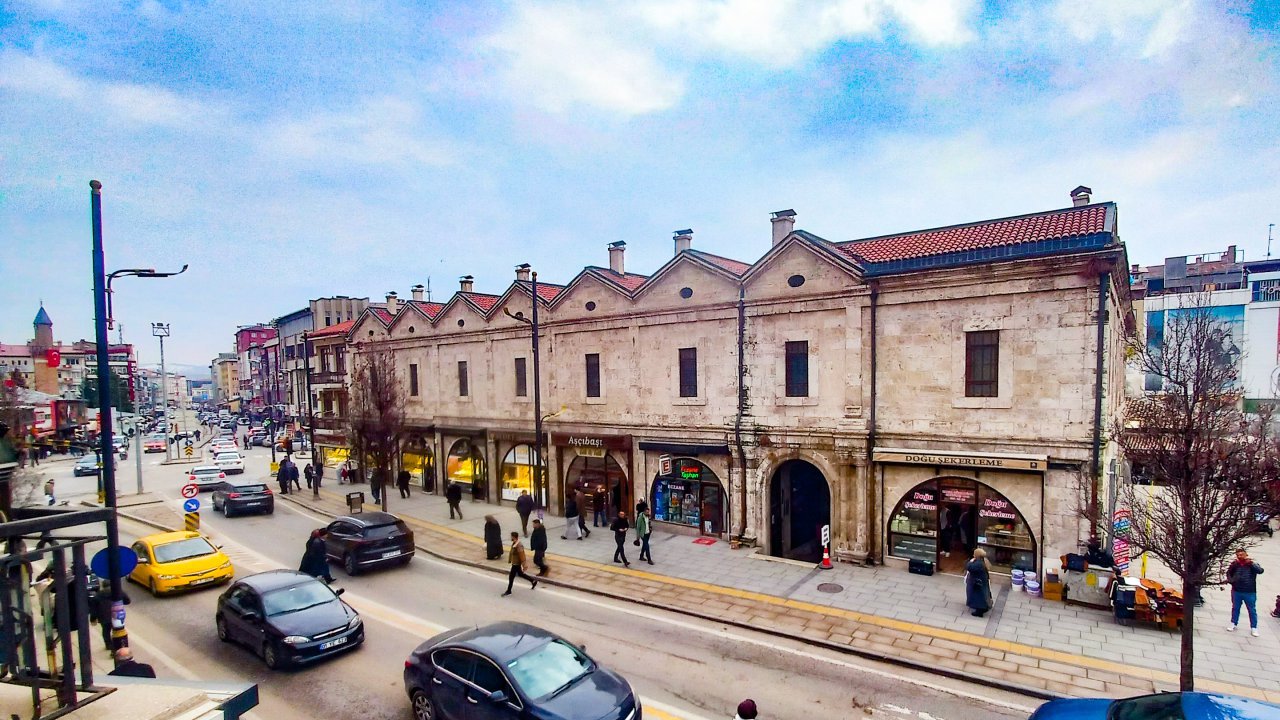
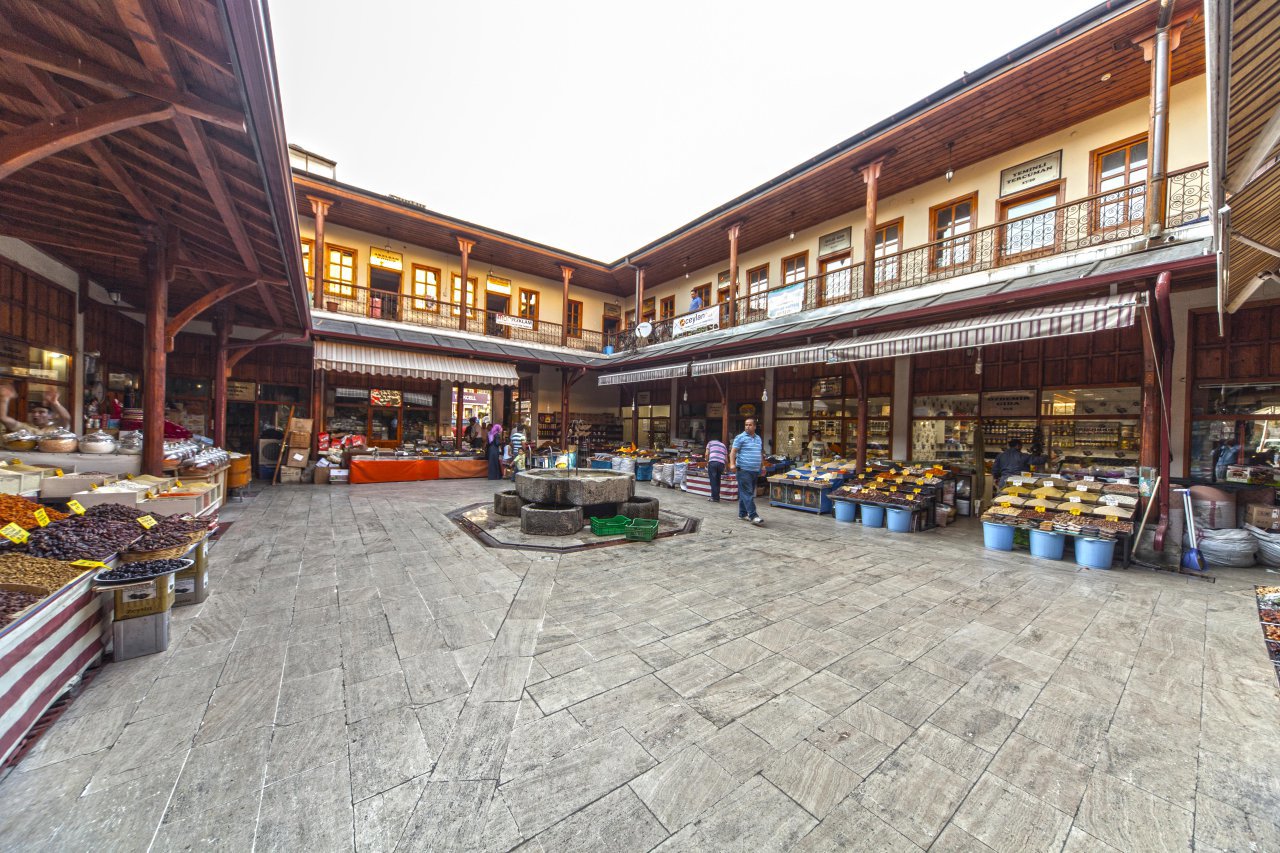
The inn in Sivas continue to contribute to the city’s commercial life today with similar functions. While Taşhan and Subaşı Han are venues where various products are sold, and Çorapçı Han is a marketplace for handicrafts, Behrampaşa Han serves as a major commercial hub offering both lodging and culinary experiences.