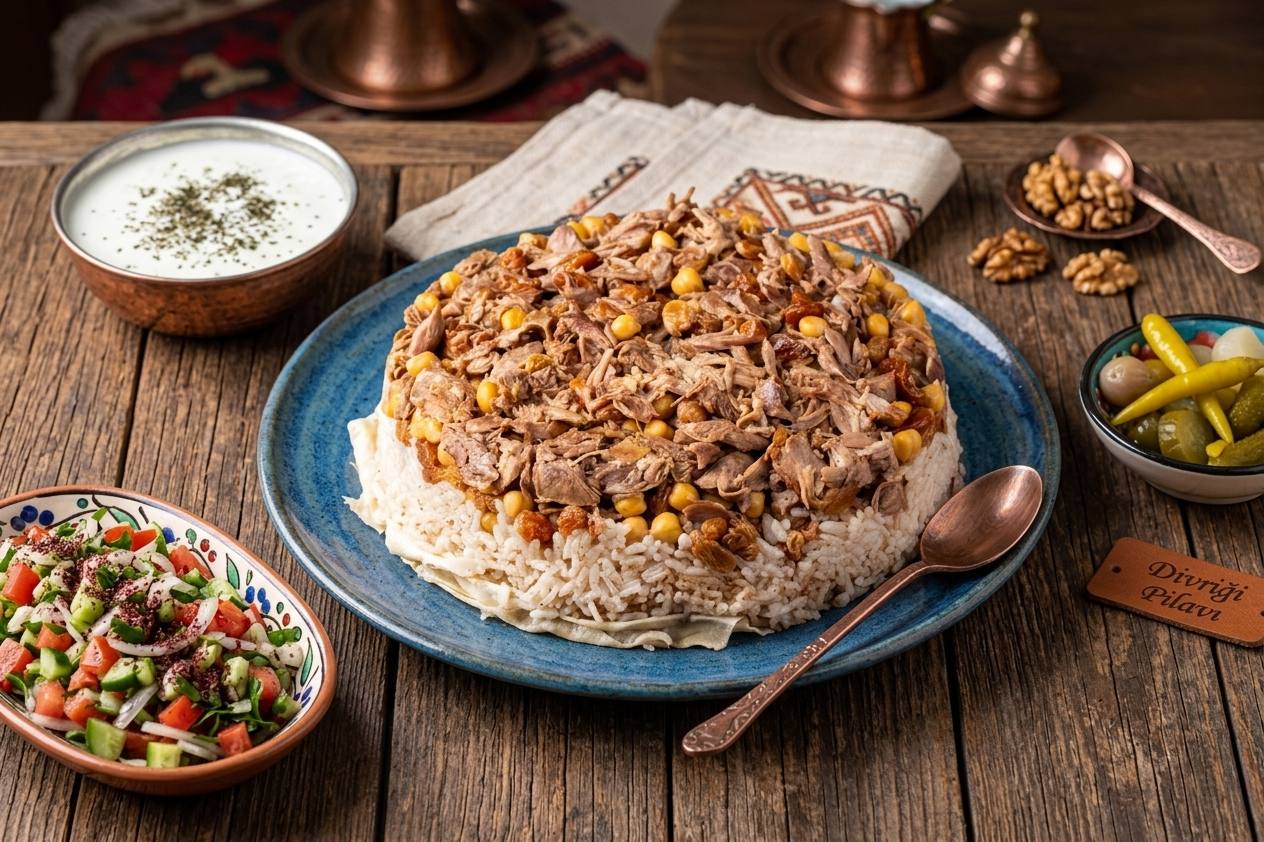
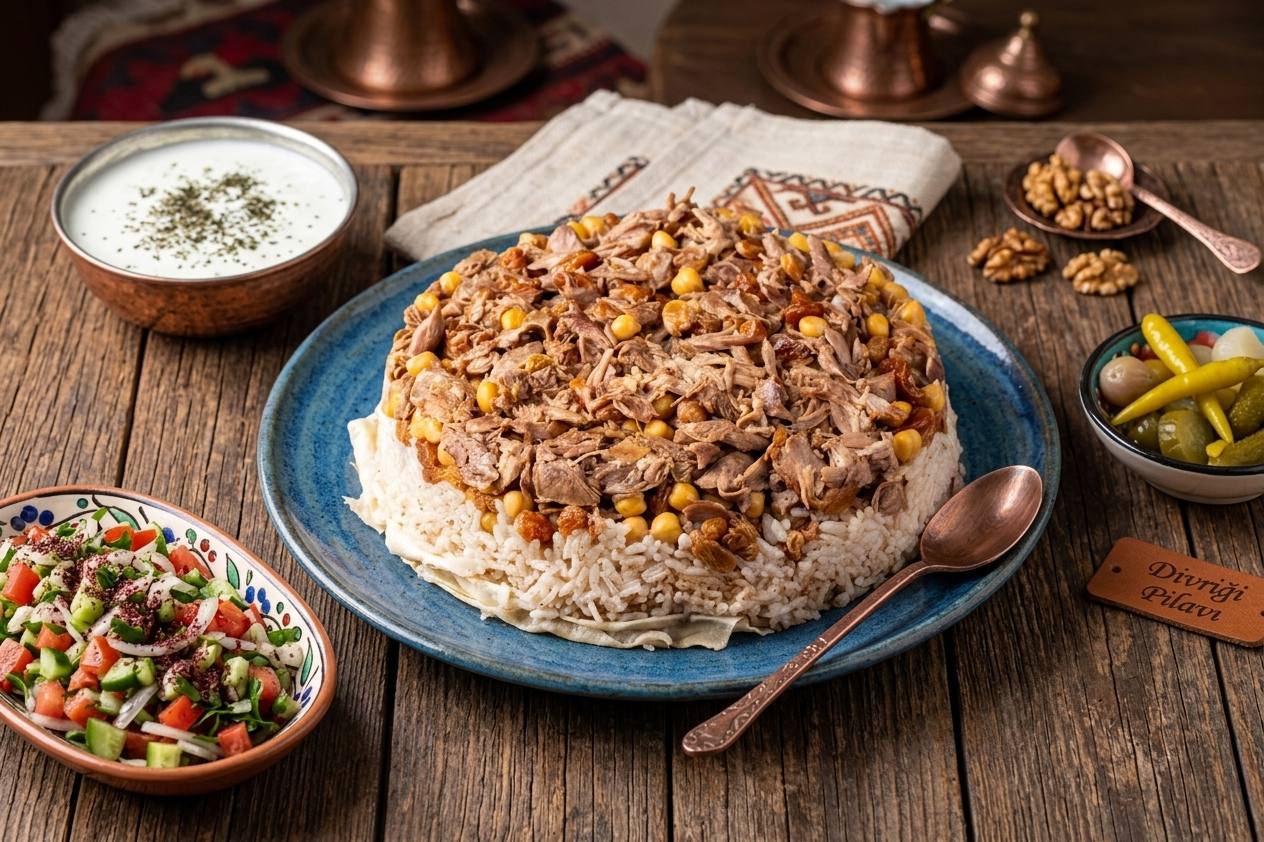
Sivas Divriği Pilaf is a tangible expression of culinary culture—encompassing cooking techniques, storage conditions, and consumption patterns—within a sociocultural framework. In this context, pilaf—a staple of many cultures—has acquired a broad conceptual framework within the Turkish culinary tradition through the migration process from Central Asia to Anatolia, the transition to a sedentary lifestyle, and the adoption of Islam (Uzel, 2018).
An examination of Central Asian Turkish culinary culture reveals a heavy reliance on grain production, fermented animal-based beverages, and game meat (Türkoğlu, 2014). Divriği pilaf, one of the most important gastronomic treasures of the Divriği district of Sivas, with its 800-year-old recipe dating back to the Mengücek Beylicate period, and is a unique traditional dish that carries the Seljuk culinary heritage into the present day.
During the preparation process, the meat is boiled in enough water to cover it, and the layer of “kef” (foam) that accumulates on the surface is carefully skimmed off. The boiled meat is cut into pieces and subjected to the “bölme” process; then, with the addition of allspice, salt, and black pepper, the dish moves on to the seasoning stage, known locally as “atlatma.” To achieve depth of flavor, the meat must be allowed to rest in this manner for at least 5 hours.
To prepare the pilaf, the rice is soaked in hot salted water to remove its starch; meanwhile, finely chopped onions are sweated in butter melted in a pot until they become translucent (without turning pink).
Layers of seasoned meat, pre-cooked chickpeas, and rested Besni grapes are placed on top of the onions in that order.
Rice is added on top of the ingredients, and enough hot meat broth to cover the mixture is poured in, after which the dish is cooked over low heat.
At the end of the cooking process, drizzling a small amount of melted butter over the top enhances the flavor.
The resting phase—known locally as “sleeping child,” during which the pilaf is wrapped in a cloth and left to rest for about an hour—is critical to developing the dish’s characteristic texture.
This traditional pilaf is typically served with grape compote.
 Back
Back